Esta página aún no está disponible en español.
The Waterworks of Money
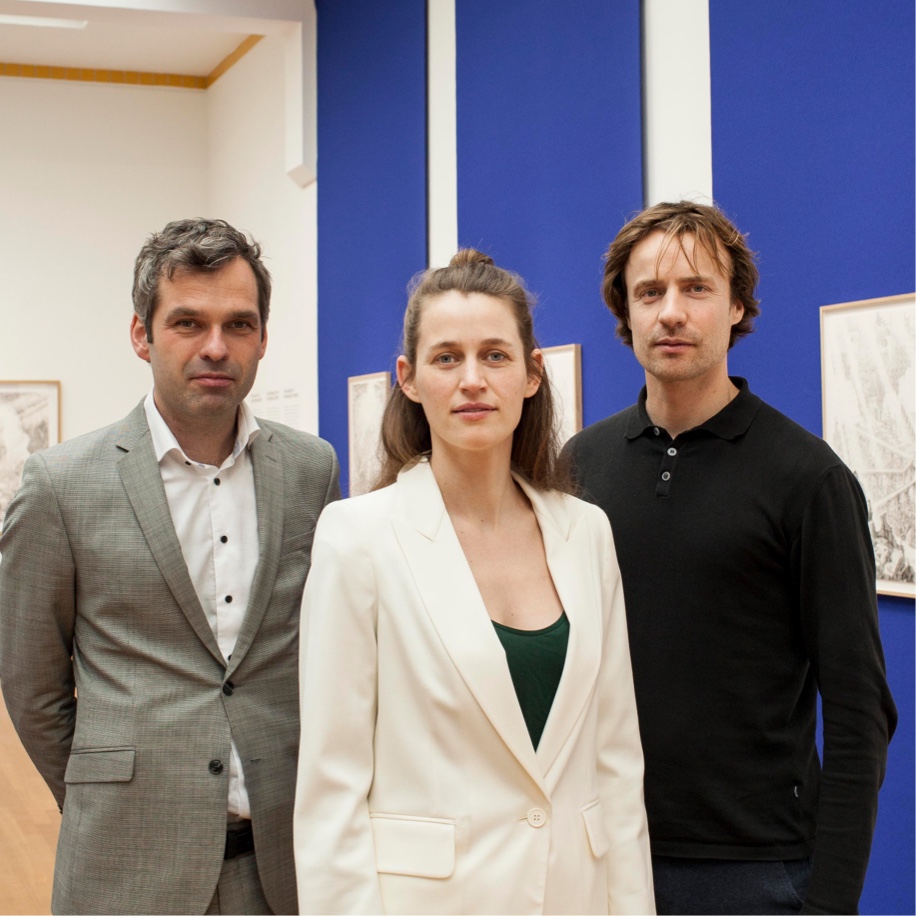
Carlijn Kingma, Thomas Bollen, Martijn Jeroen van der Linden
Carlijn Kingma maps global finance as a system of water, making visible how money flows, pools, and evaporates, and who controls it. A Future Money project.
The Waterworks of Money
Watch the video (opens in a new tab)
Visit The Waterworks of Money website (opens in a new tab)
Waterworks of Money is a groundbreaking visual project by Dutch artist and cartographer Carlijn Kingma, developed in collaboration with financial journalist Thomas Bollen and economist Martijn Jeroen van der Linden. This work transforms the abstract and often opaque world of finance into an accessible, richly detailed map, using the metaphor of water to illustrate how money flows, accumulates, and evaporates within society.
“We use the metaphor of money as water. So, we visualise the system as a waterworks; we talk about liquidity, markets can freeze, wealth can evaporate, we speak in terms of aqueducts, canals, pumps […] we make the language of financial systems accessible.”
Thomas Bollen
The project began in 2020 with deep research into global financial systems, including interviews with banks, regulators, and policymakers. The resulting map visually narrates how modern banking operates, how money is created, and how wealth circulates or stagnates, revealing systemic inequalities that often go unseen. Kingma’s cartography makes complex monetary systems intuitive, drawing on familiar terms like “cash flow,” “liquidity,” and “trickle-down” to translate finance into a physical, navigable landscape.
Through compelling imagery, Waterworks of Money critiques the existing architecture of global finance while offering three speculative futures: a corporate-controlled system, a publicly governed money system, and a decentralized peer-to-peer economy. Each scenario challenges viewers to question who controls money, how wealth is distributed, and what a more inclusive, democratic financial future could look like.
The impact has been significant: the map has been displayed in Dutch banking institutions, used in educational workshops, and cited in research on financial reform. Kingma’s approach bridges art, economics, and civic engagement, empowering the public to understand and participate in conversations about financial equity, transparency, and systemic change.
As the project evolves, Kingma and her collaborators are developing new work that maps the legal and regulatory frameworks that sustain inequality, continuing their mission to make the invisible architecture of money visible and open to transformation.