Beyond the Hackathon: Building the future of open payments through collaboration
Beyond the Hackathon: Building the future of open payments through collaboration
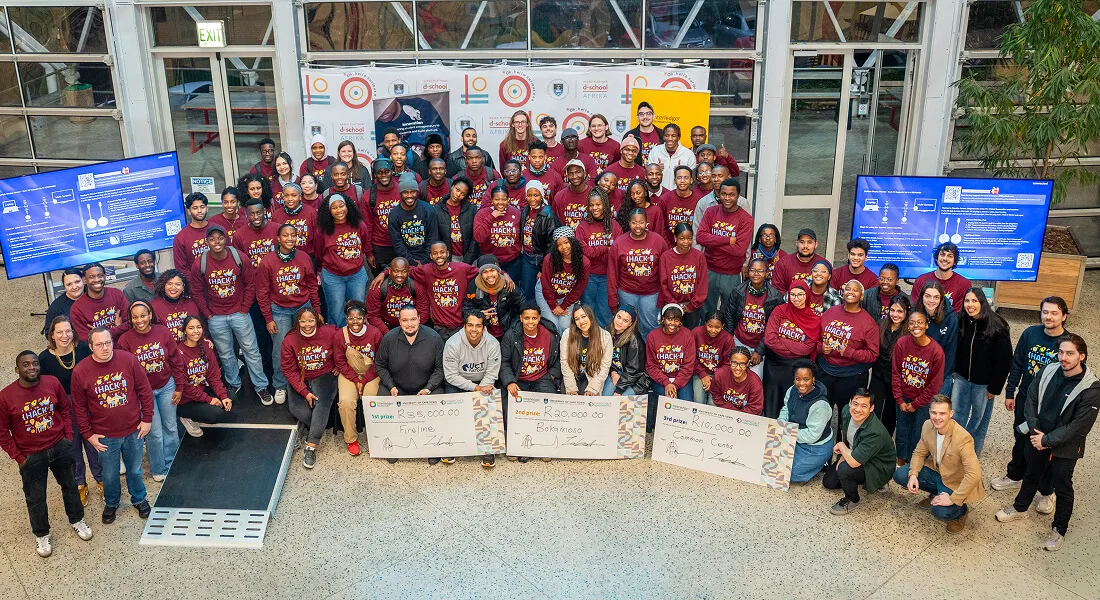
When 80 students from six South African tertiary institutions arrived at the University of Cape Town (UCT) in June for the third annual Interledger Foundation x UCT Financial Innovation Hub Hackathon, they came to build fintech solutions.
They left having done much more than that.
Over the course of a week-long bootcamp and hackathon, students worked alongside academics, Interledger Foundation software engineers, and industry mentors to explore how Open Payments technology could help solve some of South Africa's most pressing financial inclusion challenges. The result was a series of innovative prototypes addressing everything from emergency disaster relief and retirement savings to financial identity and cross-border remittances.
But while the projects themselves were impressive, they tell only part of the story.
This year's Hackathon demonstrated the value of something much broader: it showed how quickly students, academics and industry practitioners can move from learning new technology to applying it in ways that address real challenges facing South African communities.
Learning by solving real problems
Rather than asking students to build technology for technology's sake, the program challenges them to begin with people.
Following a week of lectures, workshops and mentoring, multidisciplinary teams were tasked with identifying a genuine financial challenge before exploring how Open Payments could help address it. Students from computer science, information systems, economics and financial technology worked together, combining different perspectives to design solutions grounded in real-world needs.
That approach was reflected in the projects themselves.

The winning team, Fireline, developed a community-led micro-insurance model designed to provide rapid financial assistance to families affected by fires in informal settlements, where conventional insurance is often unavailable and immediate support can make all the difference.
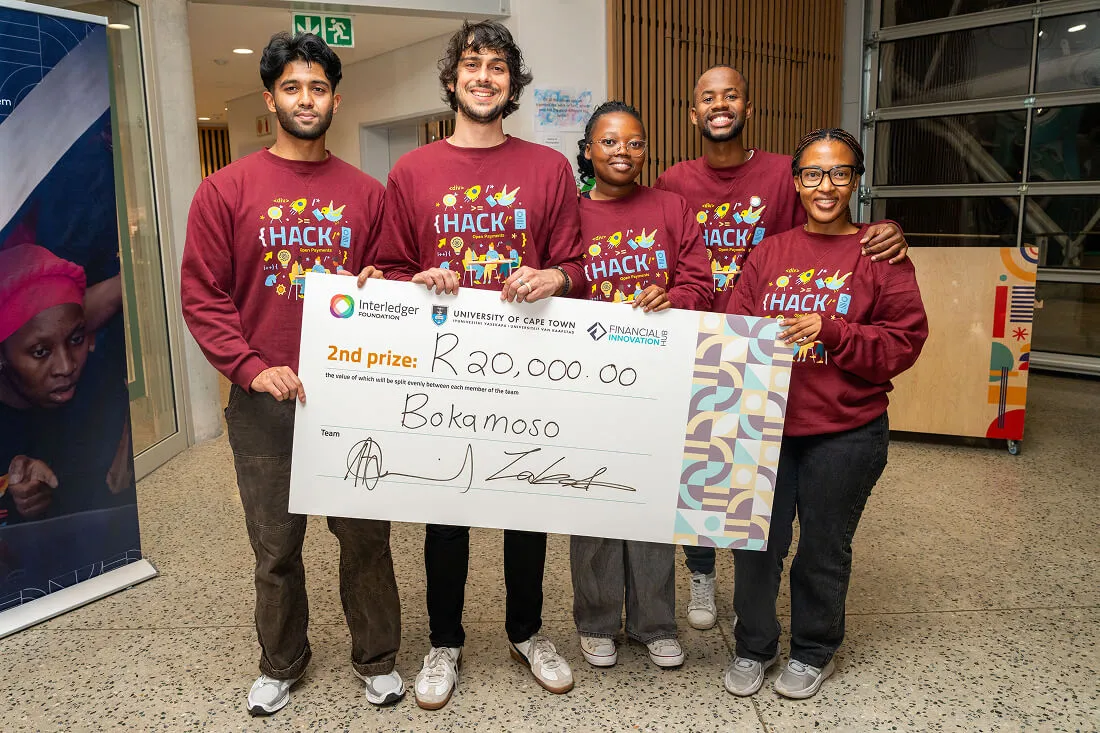
Second-placed Bokamoso tackled another overlooked challenge: retirement savings. Their solution transformed everyday purchases into automatic pension contributions, creating an accessible pathway for people, including informal workers, who are often excluded from traditional retirement products.
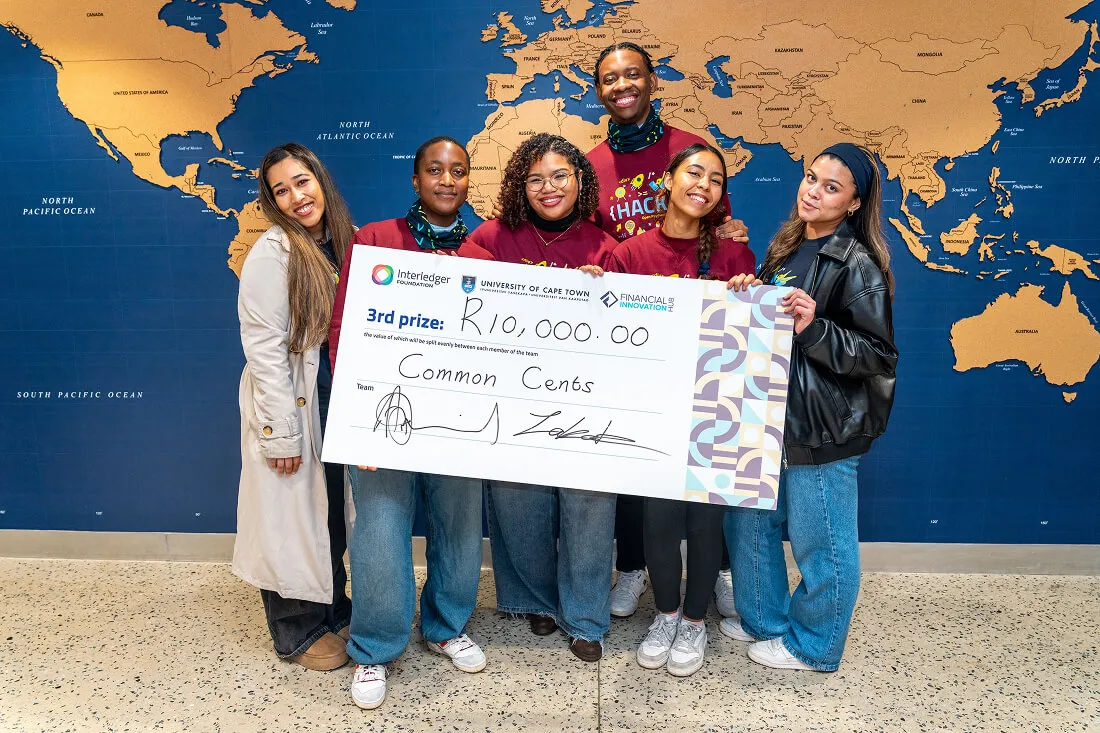
Third-placed Common Cents focused on the millions of South Africans who earn an income but remain financially invisible because they are paid in cash. Their platform created authenticated payment records that could help workers demonstrate income, opening access to services such as insurance, credit and formal employment benefits.
This year's results also marked a significant milestone for the Hackathon. For the first time in its history, women featured in every winning team, with the overall winners, Fireline, comprising three women studying towards their MPhil in Financial Technology at UCT. While the projects were judged solely on their innovation, technical execution and real-world impact, the outcome reflected the increasingly diverse pipeline of fintech talent emerging from South African universities.
Although each team approached a different problem, they shared a common philosophy: meaningful financial innovation begins with understanding the realities people face every day.
That was one of the biggest lessons for Fireline's winning team.
"We learnt how much it matters to refine your understanding of a problem before jumping into building a solution," the team reflected afterwards. "The more time you spend genuinely understanding the people you're building for, the more likely your solution is to meet their needs."
A different kind of classroom
For Dr. Allan Davids, Director of the UCT Financial Innovation Hub, that mindset is exactly what the program is designed to encourage.
"When the average person thinks about fintech, their mind immediately goes to finance and technology," he says. "However, this space includes so many other disciplines, such as computer science, economics and information systems. Hackathons like this bring all these different disciplines together into one space, giving participants the education, structure and support to reimagine the way finance looks and build a financial system that serves them and their community."
That interdisciplinary approach has become one of the defining characteristics of the partnership between the Interledger Foundation and the UCT Financial Innovation Hub.
The Hackathon is not a standalone event. It forms part of the UCT Financial Innovation Hub's broader innovation ecosystem. Alongside its teaching, research and community-building activities, the Hub supports aspiring student entrepreneurs through initiatives such as the GenesisBloc Launchpad, a pre-incubator that helps early-stage teams develop ideas into viable ventures.
When students become mentors
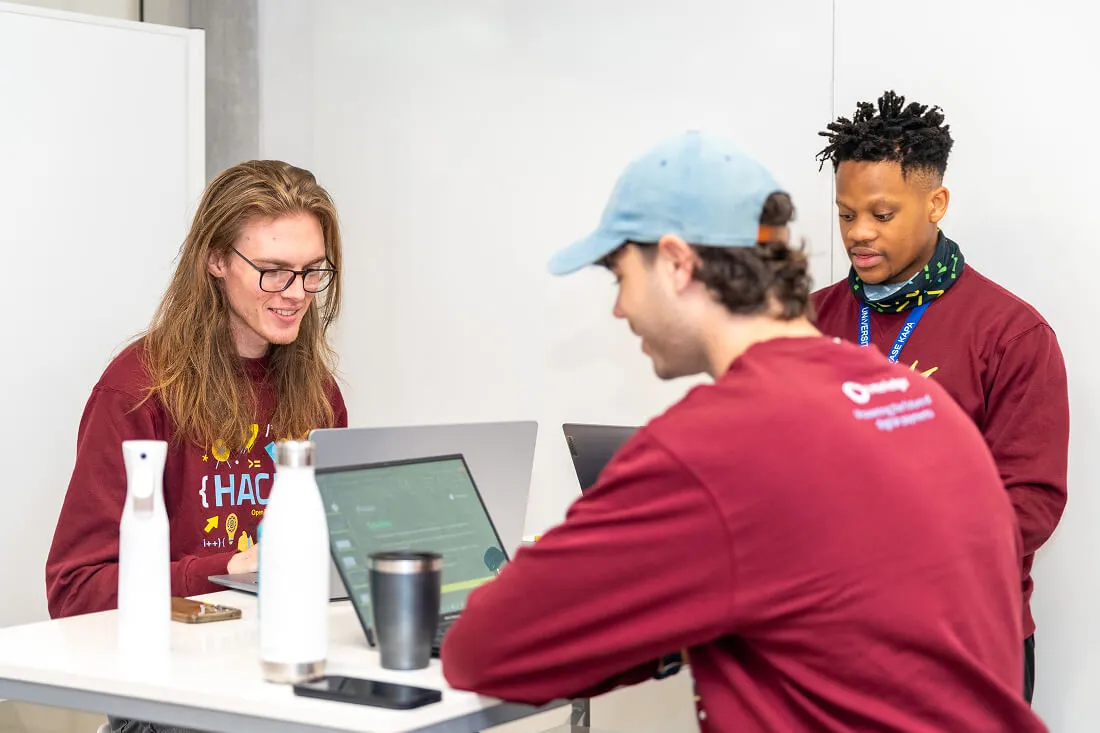
One of the clearest examples of that ecosystem in action is Marc Levin.
After competing in the 2024 Hackathon, Levin returned this year not as a participant, but as a mentor. Drawing on his own experience, he developed new teaching tools that helped students understand Open Payments more intuitively, allowing them to spend less time solving technical setup issues and more time exploring how the technology could be applied to real problems.
Following feedback from previous participants, this year's program deliberately incorporated more alumni mentors and instructors, creating an environment where students could learn from people who had recently faced the same challenges.
Innovation is a two-way conversation
For the Interledger Foundation, the Hackathon is about more than the solutions built during the event. It is also an opportunity to learn from the people using Open Payments firsthand.
Mentors and software engineers use the event to observe how students engage with tech, where they encounter challenges, and which new ideas emerge when people from different disciplines begin experimenting. Those insights help shape future documentation, developer tools and technical support, creating a continuous feedback loop between education and the evolution of open financial infrastructure.
As Alex Lakatos, Chief Technical Officer at the Interledger Foundation, explains, the exchange of ideas is one of the program's greatest strengths.
"We invest in the Hub and events like this because they are a practical testbed to develop people, validate the Interledger technology, and improve documentation in real time," he says. "Our shared values continue to produce tangible outcomes, from student-built features and onboarding wins to cross-border test transactions."
Building an ecosystem for the future
As the partnership prepares to welcome more universities in the years ahead, the UCT Hackathon is becoming more than an annual competition.
It demonstrates how academic institutions can play an active role in shaping the future of financial technology by bringing together students, researchers, and industry to solve real-world problems.
The prototypes may attract attention, but they are only one measure of success. Every year the program produces new mentors, stronger documentation, more confident developers and ideas that continue to evolve long after the Hackathon has finished.
If this year's Hackathon is any indication, some of the people who will build the next generation of open financial infrastructure are sitting in university classrooms today.