
Why Campuses are Becoming Testbeds for Digital Finance
The institutions prototyping tomorrow's financial infrastructure are on campus. Here's why this matters for anyone building inclusive digital payment systems.
A pattern is emerging across the digital finance landscape that deserves attention: universities are becoming the most effective laboratories for prototyping inclusive financial infrastructure. Not because they're teaching about payments, but because they're focused on solving one of the hardest problems in financial technology: the creation of systems that work for people who've been systematically excluded from the existing ones.
At Bowie State University, our four-year partnership with the Interledger Foundation has explored insights that extend far beyond the classroom. What we've learned has implications for how institutions, foundations, and enterprises should deploy emerging financial technologies focused on the underbanked.
The Insight: Excluded Communities Produce Better System Designers
The conventional approach to financial technology development follows a predictable pattern: building systems that serve existing customers, especially high-net-worth customers, and then attempting to extend them to underserved populations. This top-down approach consistently fails. Systems designed for inclusion as an afterthought rarely achieve it.
Universities serving historically excluded communities flip this model on its head. When emerging professionals who have personally navigated financial exclusion design payment systems, they don't treat underserved populations as edge cases; they start with the conditions most systems ignore. One of the experiential learning activities is highlighting alt-banking options: what they are (alternatives to traditional banks including pawn shops, pay-day lenders, and title-lenders in the US), where they are located (usually in high-poverty areas), who their customers are, what services they offer, and diving deeper to gain empathy for those who are financially excluded. The result is an approach that's inherently more robust and equitable by focusing on the customer and being data-driven.
This isn't a diversity or inclusivity argument. It's an argument for customer-focused design thinking that leads with empathy and understanding. Systems stress-tested against real exclusion patterns, which are built by designers who bring empathy grounded in lived experience rather than persona research, will outperform systems tested only under ideal conditions.
The Framework: Why Academic Environments Outperform Corporate Labs
Four structural advantages make universities uniquely positioned as financial infrastructure laboratories:
1. Neutral Governance Ground
Corporate innovation labs operate under quarterly pressure while government pilots carry political risk. University environments exist outside both constraints with a consistent supply of fresh-minded and engaged talent. When our students built prototypes during the Amtrak Hack-on-Rails, a two-day challenge aboard a moving train, they weren't optimizing for market viability or regulatory optics; students were solving problems without artificial constraints on what solutions could look like. The most valuable innovations in open payments often require exploring directions that wouldn't survive a corporate roadmap review.
2. Microcosm Fidelity
A university campus replicates societal transaction patterns at a manageable scale. Students bring their community experiences to campus. International students navigating cross-border payments, small vendors needing affordable processing, and individuals managing constrained budgets aren't simulated personas but lived experiences. When a payment prototype fails on campus, we learn something real. When it succeeds, we have evidence that transfers to broader deployment.
3. Controlled Failure Environments
The cost of failure in production environments is measured in dollars, reputation, and regulatory scrutiny. The cost of failure in academic environments is measured in learning. This asymmetry is a strategic advantage. Students leverage creativity to build innovations. The environment is designed to foster innovation through creative thinking exercises and the design thinking methodology, and to encourage data-driven iteration. Our students have built, broken, and rebuilt dozens of solutions. Each iteration produced insights that would have been prohibitively expensive to generate in commercial settings. Furthermore, Bowie State University creates a culture of collaboration and community.
4. System Designer Pipeline
The most overlooked variable in financial infrastructure development is who designs the systems and determines who they serve. The campus community shapes the values and mental models of people who will architect financial services for decades. By embedding inclusive design principles at this stage, guided by experience and empathy, we're shaping the institutional DNA for Fintech innovations.
The Model: What Institutional Partnership Actually Looks Like
The Bowie State University and Interledger Foundation partnership has evolved through three phases that offer a template for similar initiatives and, more importantly, a student engagement journey that transforms how emerging professionals understand and solve real-world problems.
Phase 1: Curriculum Integration — From Awareness to Engagement
Open payments concepts are integrated across Management Information Systems and Business courses through a major-agnostic approach. The inclusive approach aims to develop future community leaders, regardless of major, to understand how inclusive financial systems work and why they matter.
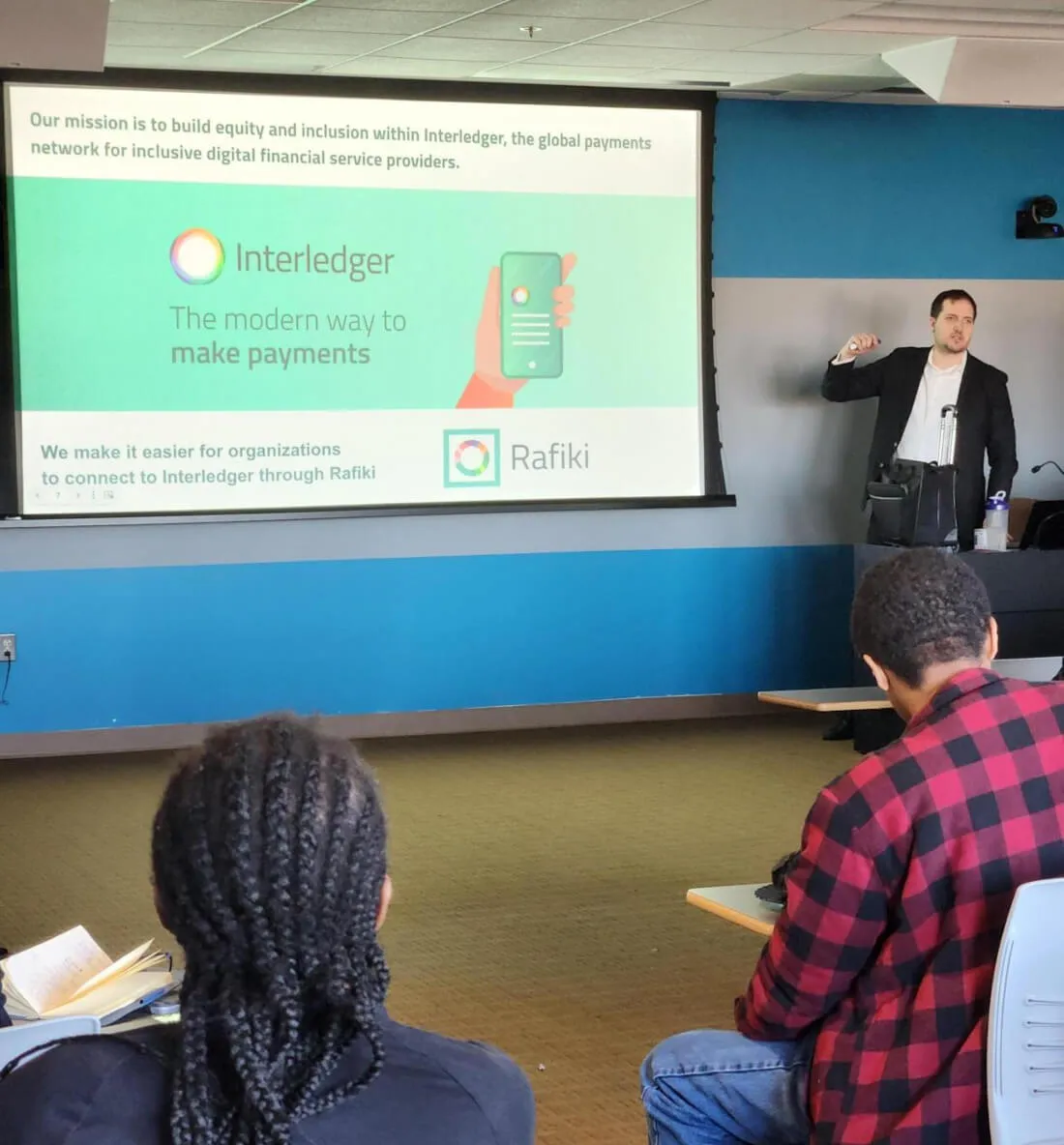
Students enter this phase with varying levels of interest. Some arrive skeptical; others curious. The goal isn't immediate conversion, but exposure to problems they may not have known existed and solutions they didn't know were possible. Additionally, students are keenly aware of the struggles in their communities but may lack awareness of the tools and partners that can address these challenges.
Phase 2: Applied Research Infrastructure — From Learning to Contributing
The Interledger Student Scholars program, an initiative funded by the Interledger Foundation, positioned emerging professionals as research scholars, community engagement specialists, and technical consultants. Complementing the scholars, Interledger Community micro-internships connect students directly with community members who are developers, entrepreneurs, and advocates actively building open payment systems.
The second phase helps shift students from information and knowledge consumers, to producers and contributions to digital finance. When a student transitions from reading community posts to development documentation, the student helps share their knowledge. The rotation offers a tangible artifact that can’t be taught in a textbook. Furthermore, students are recognized for their contributions by community members.
In the rotation, students are able to see their growth which is fundamental to self-efficacy. Problems that once seemed abstract, such as cross-border payments, transaction fees that erode small payments, and systems that exclude entire communities, have now become tangible challenges that students have the tools to address, along with a global support network.
Phase 3: Community Connection Architecture — Supporting a Global Community
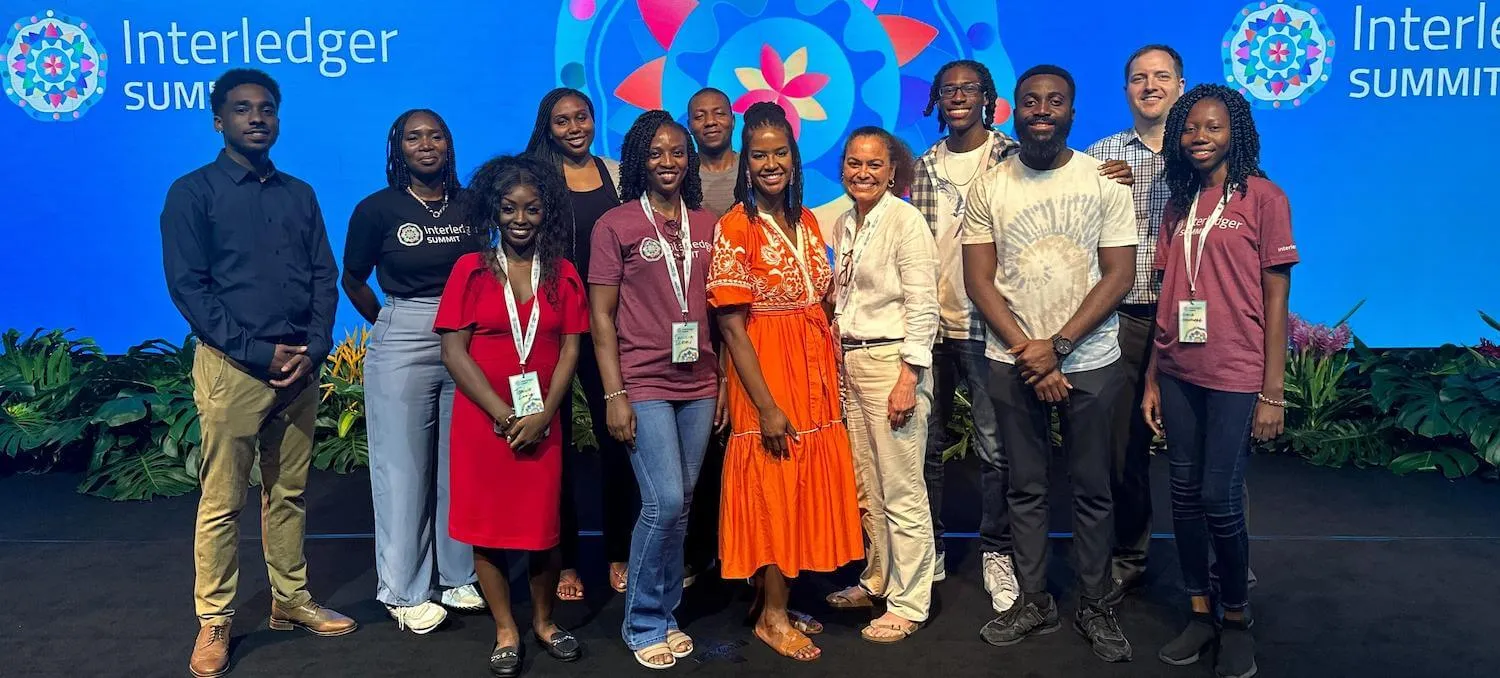
Students have engaged directly with the global Interledger community through summits in New Orleans, Costa Rica, Mexico City, and Cape Town, collaborating with entrepreneurs and protocol developers building production systems.
This exposure does something that cannot be taught in a class, watched on a video, or read in a textbook. Students engage with problems they're studying, with solutions developed by the Interledger community. The ecosystem is global, the challenges are shared, and the solutions require perspectives from everywhere.
When students return from these experiences, they bring back more than knowledge. They bring relationships, context, and a fundamentally different understanding of what's possible. A student who has met with the digitally financially excluded in Latin America approaches their capstone project differently than one who has only read case studies.
The Strategic Implication: Universities as Gateway Infrastructure
For foundations, enterprises, and institutions considering how to build truly inclusive financial systems, the talent and insight you need may already exist in communities you're not reaching.
HBCUs and minority-serving institutions sit at the intersection of technical capability and lived experience with financial exclusion. Bowie State's position as the first HBCU partner in the Interledger ecosystem is strategic. We're a gateway connecting underrepresented talent to opportunities in financial technology while ensuring that the architects of tomorrow's infrastructure understand exclusion firsthand. This gateway function is replicable, and we’re seeing early success at other HBCUs as Interledger continues to expand through their NextGen grant. Are you building partnerships that access this insight, or are you trying to simulate it internally?
The Invitation: Rethinking Where Innovation Happens
The future of digital finance is being prototyped in environments that don't look like traditional innovation centers. The insights emerging from BSU and other NextGen partners focus on inclusive design, system architecture, and what actually works for excluded populations, with value far beyond academic publication.
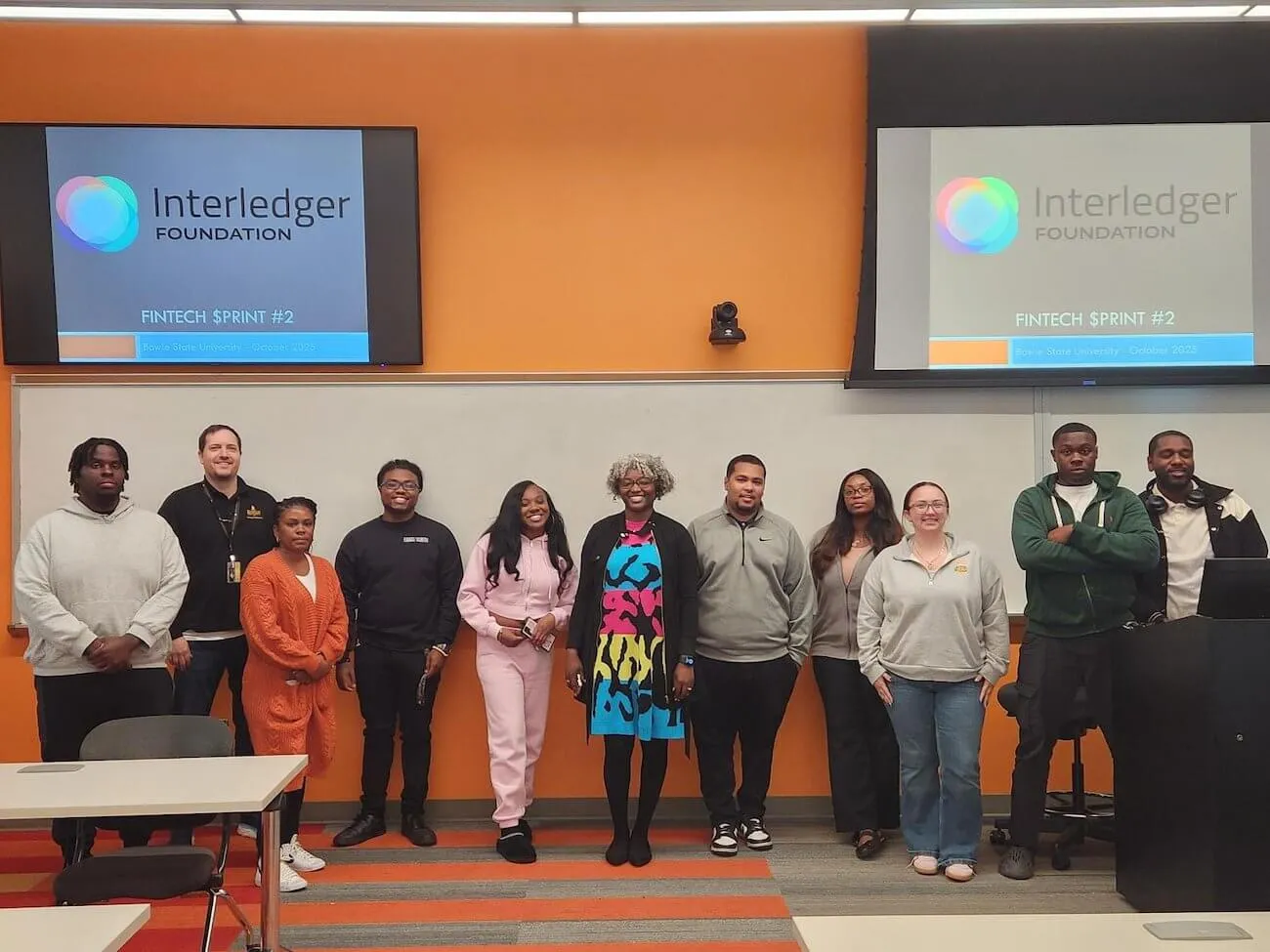
At Bowie State, we've learned that the most important question isn't "how do we teach students about open payments?" It's "how do we build systems that work for everyone?"
The answer is reshaping how we think about digital financial infrastructure development, and it should reshape how you think about it, too.
Watch an interview with the Bowie State students at the Costa Rica Summit 2023

Dr. Andrew Mangle leads technology translation initiatives at Bowie State University, focusing on the intersection of emerging payment technologies, institutional governance, and workforce development. His work bridges academic research and practical deployment of inclusive digital financial systems.