Interledger Awards $20,000 to Five Organizations to Explore Community-Centered Financial Infrastructure
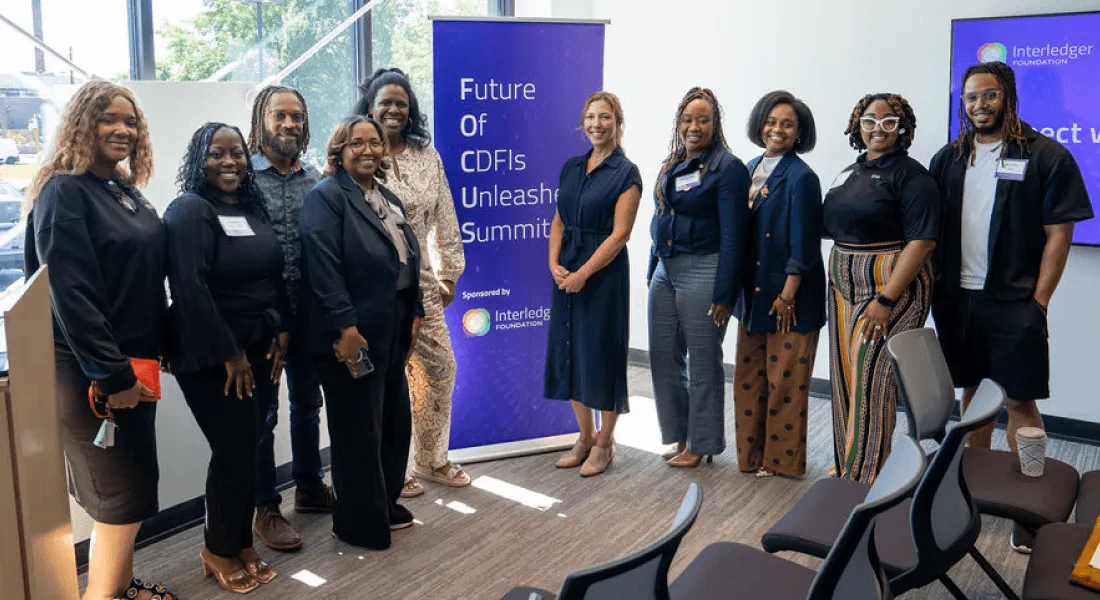
Following FOCUS: The Future of CDFIs Unleashed Summit in Atlanta, the Interledger Foundation awarded $20,000 each to five participating organizations to research and develop new approaches to financial infrastructure, payments, and access to capital.
Across the United States, Community Development Financial Institutions (CDFIs) and mission-driven fintech organizations are often closest to the communities navigating gaps in access to capital and financial services. Their proximity gives them a unique vantage point: they see where existing financial infrastructure works, where it creates friction, and where new approaches could better reflect how people and small businesses actually move, manage, and access money.
The grants build on conversations that began at FOCUS, where CDFIs and fintechs came together to examine how financial services can better respond to the realities of the communities they serve.
Each organization is approaching that challenge from a different perspective. From more flexible loan repayment experiences and real-time financial data to community-controlled funds and research, the projects share a common goal: exploring how more open, accessible, and interoperable financial infrastructure can reduce barriers and better serve communities that have historically been underserved by traditional financial systems.
Village Micro Fund: Infrastructure for a Collective Economy
Village Micro Fund will use its grant to advance EnDAO, a platform that enables community groups, cooperatives, and investment clubs to pool and manage money with transparency and shared control.
The project will research how EnDAO can connect its stablecoin-based infrastructure to familiar U.S. payment rails, including ACH, wire transfers, and FedNow. The goal is to give communities the benefits of transparent, shared financial infrastructure without requiring users to understand or directly interact with cryptocurrency.
Kiva: Putting Trust Before Technology
Kiva's project is a community listening initiative that will explore financial inclusion from the perspective of Native entrepreneurs who face barriers to affordable capital.
Through direct interviews and focus groups with Native entrepreneurs, Tribal partners, and Native-serving organizations, Kiva will identify barriers and opportunities that can inform future outreach, education, partnerships, and product design to serve the community. Through this research they will also discover whether open payment pathways could truly help reduce friction or cost for the community.
ACE: Bringing Open Payments Into the Lending Experience
Access to Capital for Entrepreneurs (ACE) will explore integrating open payments infrastructure into its borrower-facing loan repayment portal to improve payment functionality for small business borrowers across Georgia.
This would be a valuable technical component of the stack that enables improved, secure, bank-connected payment functionality. The capabilities could eventually support new approaches to underwriting based on borrowers' real-time cash flow.
The learnings can be applicable to other CDFIs seeking to modernize payment infrastructure for underserved small business borrowers.
WACIF: Rethinking the Loan Repayment Experience
The Washington Area Community Investment Fund (WACIF) will launch its Resilient Repayment Initiative, a three-month research project examining how borrowers experience loan repayment and where existing processes create friction.
Through surveys and interviews, WACIF will explore borrower preferences and challenges, particularly for entrepreneurs whose cash flow may not follow predictable monthly patterns. The findings will inform a roadmap for potential improvements, including more flexible repayment experiences and open payment pathways. Listen to WACIF on our latest FM Podcast.
AltCap: Building More Borrower-Centered Payment Pathways
Through its Payment Pathways Initiative, AltCap will research how to make its post-closing loan payment experience more accessible, efficient, and responsive to underserved small business owners.
The three-month project will combine borrower and stakeholder feedback with research into open payments, real-time payment options, and potential Salesforce integration. The findings will inform a roadmap for modernizing AltCap's payment infrastructure and support its goal of developing a payment experience that is accessible, flexible, and responsive.
From Conversation to Action
These five grants are an opportunity to take the conversations and ideas that emerged at FOCUS and move them into research, experimentation, and practical next steps.
As the organizations begin this work, their findings can contribute to a broader understanding of what more open and interoperable financial infrastructure can look like in practice—and how it can help create financial services that are more accessible, responsive, and centered on the communities they are designed to serve.