Inside the USIU-Africa Open Payments Workshop: What The Students Built
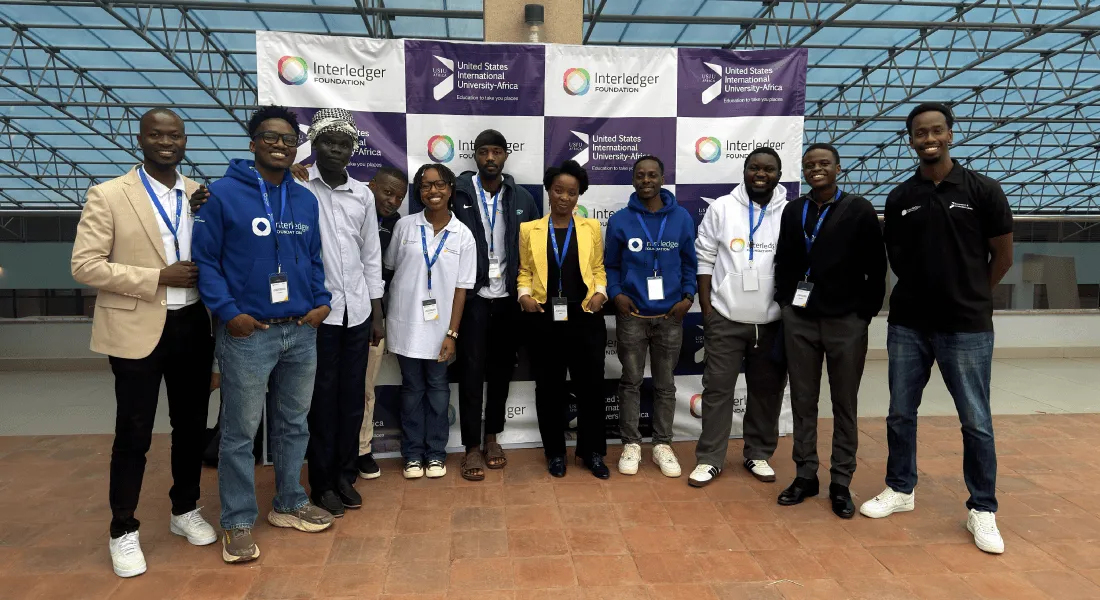
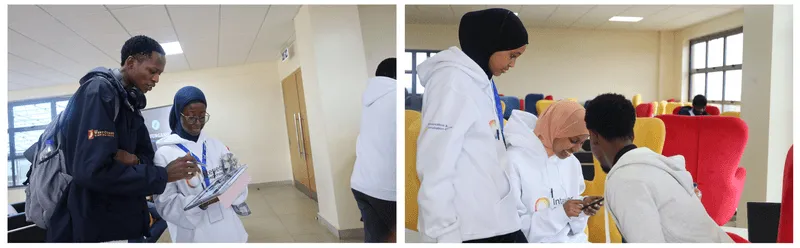
Written by Tšeli ThabaneNestled on a lush green campus in Kenya, a country with a vibrant startup culture, USIU-Africa’s Innovation and Incubation Centre hosted 30 students who presented their startup ideas built on Open Payments and Interledger. This July 1st, 2026 event marked a major milestone for the centre, 8 months into their journey as an ILF NextGen grantee. It brought together students, industry practitioners and experts for East Africa’s first ever Open Payments workshop.
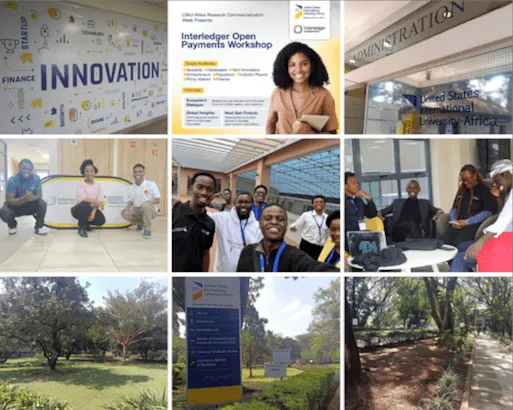
Special thanks to Dr. Billy Wadongo, Director of the Innovation and Incubation Centre, and Brooke Stanley Agina, final year Economics and Software Engineering student, for hosting us so beautifully and for making a home for Interledger on the campus.
Inside the sessions: Keynotes and a panel
MC Nicholus Kioko, pharmacy student and co-founder of HackHouse, masterfully guided the workshop attended by 50 people through keynotes, a panel discussion, and the final group pitches.
The morning sessions focused on:
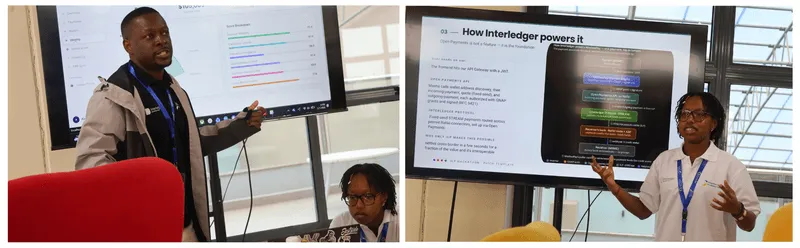
- Equity and Inclusivity: Ms Tseli Thabane from the ILF spoke about ILF’s mission and work to unlock digital financial inclusion.
- Navigating Regulation: From the Capital Markets Authority of Kenya, Mr James Hilary shared expert insights about the regulatory landscape highlighting how fintechs can prepare to navigate local regulations.
In the afternoon, industry leaders gathered to share their experiences navigating cross-border payments, interoperability, and open banking in Kenya and East Africa:
- Mr George Mosomi, Expansion Manager at Tether.
- Ms Brenda Esiromo, Head of Payments at NCBA Bank.
- Ms Christine Kitale, Vice-Chair of the Association for Fintechs in Kenya, COO and Co-Founder of Pesaswap.
The future of finance: The teams and their solutions
At the heart of the workshop were seven teams competing for a prize pool of USD 5,000. Every team pitched brilliantly, showcasing thoughtful solutions built on compelling business cases. Read on to understand the ideas and projects of the top three teams:
StreamLead - 1st Place
On the winning team were Benjamin Nengomasha (Finance) and Claire Kimai (Software Engineering).
For Kenya and its neighbouring countries, the East African Community (EAC) offers opportunities for trade, travel, and investment for economic growth. This team noticed that access to credit often stands between MSMEs and their ability to scale and fully participate in regional trade. For a small business or startup, regional trade means navigating more than 7 mobile money operators, and over 40 banks across 8 countries. This fragmented payments landscape impacts MSMEs in two big ways. Firstly, getting paid is slow and expensive. Secondly, businesses need a strong financial track record to access the credit or capital required to grow regional trade.
So, the team built MashaaPay, an ILP-based payments platform that connects MSMEs to the capital or credit they need to grow. How? By facilitating low-cost local and cross-border payments and turning everyday trade into credible financial records used to match MSMEs with lenders on the platform.
Mojaly - 2nd Place
In second place were Mantan Della, Goodluck Alphaxard and Boston Palanga, all studying Applied Technology.
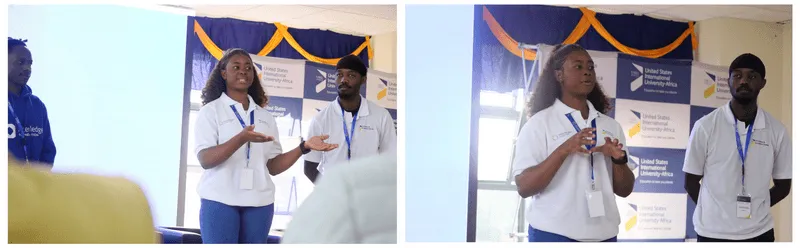
Fintechs and payment service providers that want to operate and move money between many countries face significant hurdles that include funding and managing liquidity. Team Mojaly tackled this problem from the perspective of a startup emerging from their own campus whose student body represents over 70 nationalities.
For fintech startups, resources for compliance, IT infrastructure support, and pre-funding liquidity often come with a massive price tag. The team stepped in to alleviate this with Mojaly, a unified API that connects a fintech or payment service provider to a pool of companies that are already licensed to operate in each market and country. Mojaly pools resources such that a startup has access to the IT infrastructure it needs to move money across multiple countries, and to funding for liquidity in those countries and currencies.
Koshi - 3rd Place
Team Koshi placed third, featuring an interdisciplinary team of six: International Business Administration students Fadila Issifou, Ikraam Ali, and Noel Otieno Cidney; Henry Njoroge (Global Banking and Finance); Yasmin Maalim (Applied Technology); and Victor Nyaga (Software Engineering).
Part of the promise of regional economic communities such as the EAC is to facilitate and promote in-region trade and economic integration. For people who live, work or travel within such an economic region without a common currency, the reality is a growing maze of currency conversions and fragmented payments systems. This translates into forex fees, intermediary fees, cashing in or out sometimes attracts fees, and the inevitable transaction fees.
Team Koshi worked on a solution to connect existing payments systems run by mobile money providers and banks into Interledger-powered nodes on a network. Their goal is to use the network effect to their advantage: the more payment systems that join the network, the cheaper and more efficient transactions become across the region and across currencies. Koshi aims to offer a competitive alternative to navigating payments outside of the network.
Key takeaways: From mobile money maturity to cross-border impact
Cross-border payments stood out as the golden thread running through the workshop. The teams demonstrated how interoperable rails can reshape life and trade for people and businesses across East Africa.
With nearly KSh 8 trillion (about USD 62 billion) flowing through mobile money annually and over 53 million active mobile money accounts across Kenya, access to mobile money services is widespread. Combine that with the country’s well-funded startup ecosystem, where fintechs account for nearly 30% of all tech startups, Kenya has established one of Africa’s most mature digital finance foundations.
It is fitting that the next generation of entrepreneurs and startups are tackling the complexities of cross-border transactions. And it is fitting that they do this from the heart of East Africa, using open standards and technologies to build the open infrastructure required for viable, scalable, inclusive cross-border commerce.

Tšeli’s career spans software development, management, and entrepreneurship in South Africa. She has experience delivering proprietary software for banks and retailers, and now focuses on open-source solutions and standards to deliver impactful projects in different parts of the world.