The Future of Financial Inclusion Starts With Trust
Written by Chiara OstrinReflections from FOCUS: The Future of CDFIs Unleashed Summit
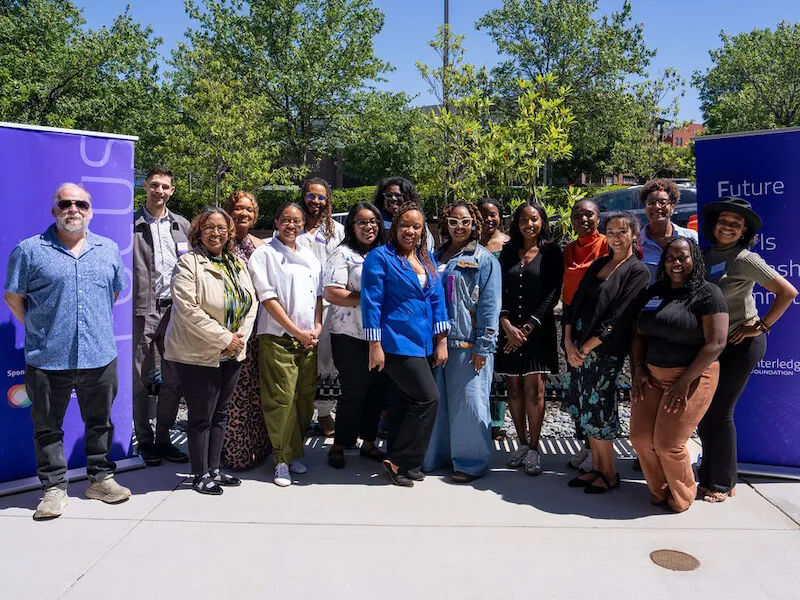
I recently attended the Future of CDFIs Unleashed Summit (FOCUS), a 2.5 day convening sponsored by the Interledger Foundation in partnership with the Atlanta University Center Consortium (AUCC) Data Science Initiatives (DSI).
Unlike many conferences, this gathering was intentionally small to foster honest conversation. Led by Casey Diké of Blaze Group and our wonderful Programs team at the Interledger Foundation, the event brought together Community Development Financial Institutions (CDFIs), fintech leaders, educators, and college students to explore an increasingly important question: how do we build financial systems that meet the realities of today's economy?
Organizations including AltCap, Kiva, Washington Area Community Investment Fund (WACIF), Access to Capital for Entrepreneurs (ACE), and Village Micro Fund shared perspectives on financial inclusion, access to capital, entrepreneurship, and community development.
Over the two and a half days, we explored difficult but necessary questions:
- How might traditional approaches to financial services overlook the realities of the communities they aim to serve?
- Where are the gaps between what technology makes possible and what institutions are actually implementing?
- How can partnerships prioritize community outcomes while ensuring long-term sustainability?
Discussions around trust, financial literacy, instant payments, and digital infrastructure all pointed back to the same challenge: how do we build systems that people not only have access to, but actually want to participate in?

Trust and Opportunity
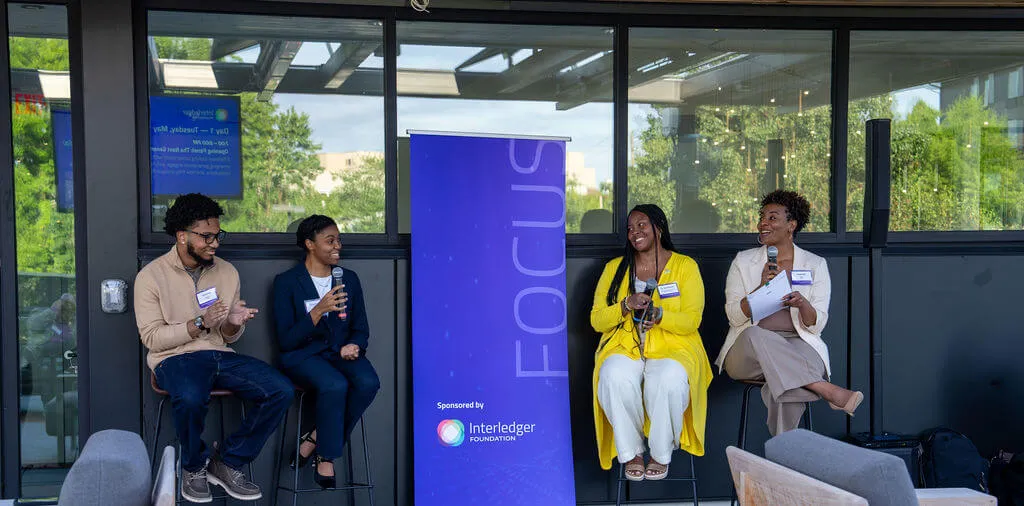
The welcome reception on Wednesday night featured two students from Spelman College and Morehouse College, both of which are part of AUCC, a recipient of the Interledger Foundation NextGen grant. The students, Dallas Cook and Alexandra Pate, offered a perspective that felt both refreshingly honest and relevant to the conversations that followed through the days to come.
One question raised during the panel stayed with me throughout the entire convening: Do people feel safer holding onto their money rather than putting it into a financial institution?
This was something I never thought about growing up.
When I was in college, I just opened a bank account at my parents' bank. I never questioned whether I trusted the institution itself, and generally speaking, I had cash, no digital assets, and definitely no credit card.
Today's generation is different. The digital age has enabled access to money, e-commerce, and content platforms more easily than ever before. And still, the younger generation shows strong skepticism. This was clear from the students on the panel who have already experienced digital scams and fraud. Prompting the questions everyone asks (no matter the age), how do we keep our money safe?
Distrust in financial systems comes from generations of opacity, exclusion, inaccessible language, and systems that often feel disconnected from the realities of the people they claim to serve. In truth, access without trust often leads nowhere. Without trust in the financial system, there is no movement of money, no participation. And without participation, there are no opportunities.
The next generation: times are changing
As conversations continued throughout FOCUS, it was impossible to ignore that the economy has changed in ways institutions (and even regulation) haven’t quite kept up with.
Today’s reality looks radically different than it did even twenty years ago. The digital age has brought a rise to creator and gig economies, which represent a fundamental shift in the global workforce. What were once side hustles are turning into legitimate, million-dollar businesses, creating new pathways for entrepreneurship, and wealth.
Students, creators, entrepreneurs, freelancers, and small business owners are participating in an economy where income is increasingly digital, flexible, and often unpredictable.
Someone may receive a large payment one week and struggle financially the next month. A creator may have substantial annual income while appearing financially unstable on paper. A freelancer may have healthy revenue but fail to meet lending requirements designed around traditional employment.
These individuals can be viewed as higher risk when it comes to loans and lending, despite representing one of the fastest-growing segments of the economy. The creator economy alone is projected to reach $1.35 trillion by 2033 (Forbes). This is not a trend, but an entirely new ecosystem that can often fall out of traditional banking structures and assumptions.
How financial systems meet this new customer becomes even more significant when viewed alongside what economists call the Great Wealth Transfer. Over the coming decades, trillions of dollars will move from older generations to younger ones. This shift is forcing institutions to consider the implications for wealth transfer, asset retention and a generation that is completely different from the one before it.
According to a Bank of America Private Bank study, younger investors are significantly more likely to consider a company's environmental, social, and governance (ESG) record when making investment decisions. They are also more likely to diversify and look to digital assets and alternative investments. This underscores the change in not only technology, but values.
Gen Z and Gen Alpha are digitally native, highly informed, and more aware than ever of systemic failures and digital security concerns. They don’t just ask whether an institution can hold their money. They are asking whether that institution goes beyond the minimum and truly reflects trust, transparency and accountability.
If the way people earn money has changed, shouldn't the systems designed to support them evolve as well?
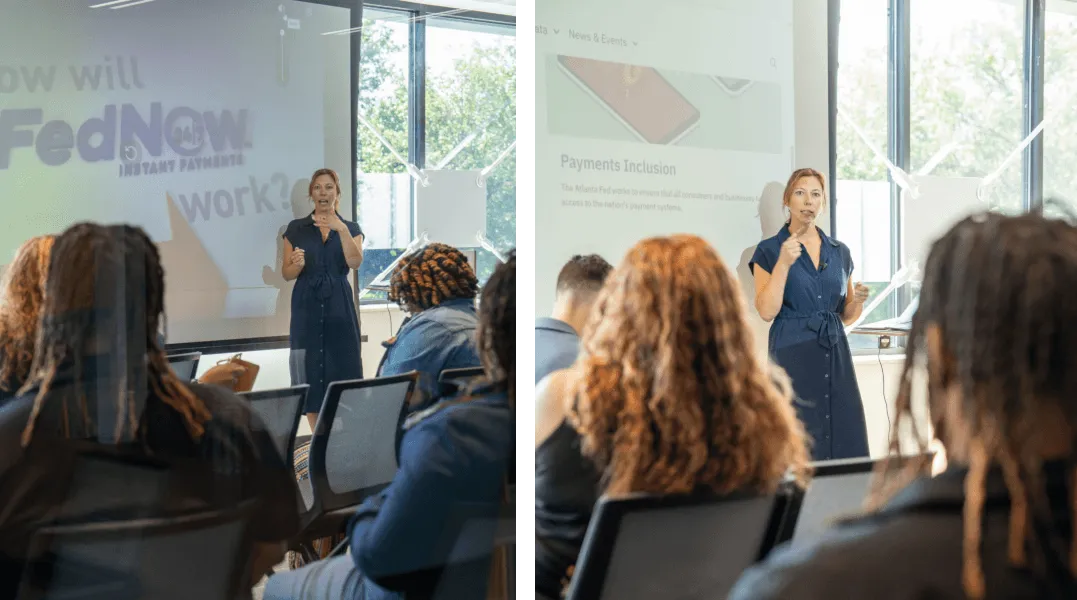
One of the most exciting themes to emerge from FOCUS was that financial infrastructure is beginning to adapt to the realities of a digital economy. Consumers expect money to move at the speed of the internet. They expect real-time information, real-time communication, and real-time payments.
Here in the United States, initiatives like FedNow represent an important shift, allowing financial institutions to move money instantly. At the same time, recent legislation including the GENIUS Act and the proposed CLARITY Act, show that digital assets, stablecoins, and new forms of financial infrastructure are becoming part of the broader financial ecosystem. The GENIUS Act is a U.S. federal law passed in 2025 that establishes the first regulatory framework for payment stablecoins, and the CLARITY Act is designed to establish a definitive regulatory framework for digital assets.
Whether you are a community lender, a regional credit union, a fintech startup, or one of the largest financial institutions in the country, this is a significant opportunity for meaningful participation.
As technology and regulation evolve, helping people understand how financial systems work and how to participate in them confidently will bridge the gap in trust and opportunity. Financial literacy and financial education are foundational to the pathway of financial health.
What’s Ahead?
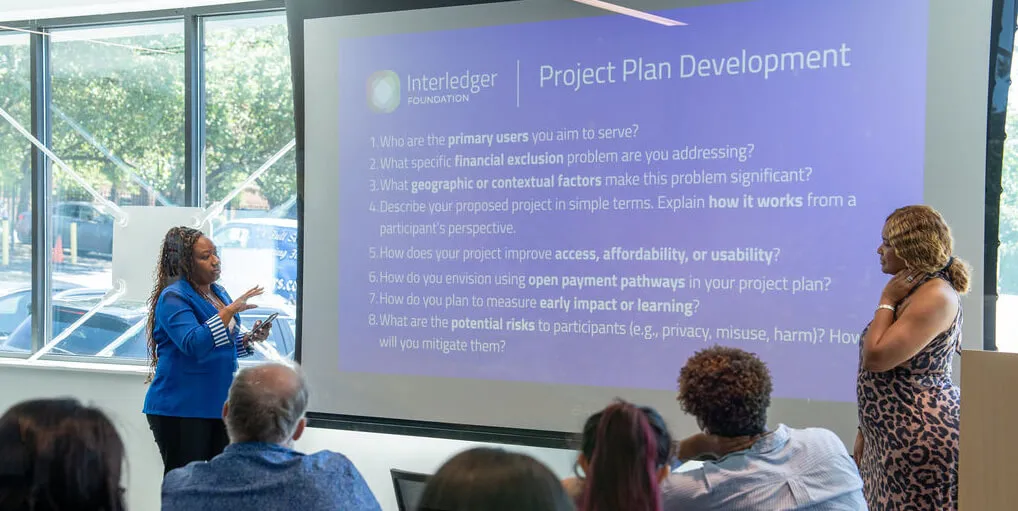
FOCUS wasn’t just another conference, but a place where collaboration and honest reflection were foundations to what comes next.
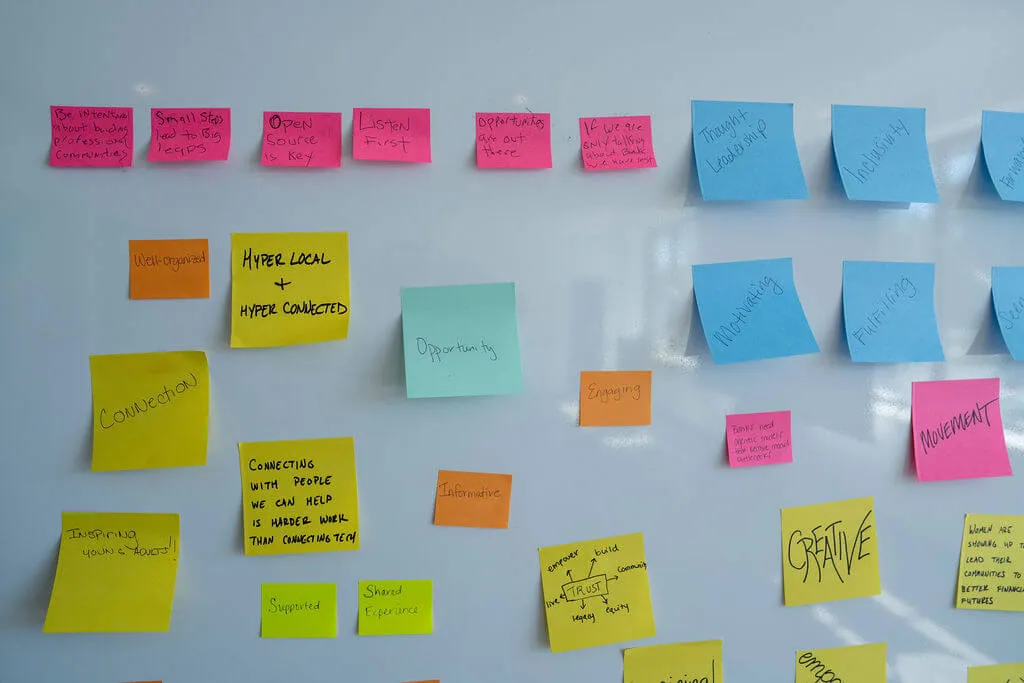
Financial exclusion is not always visible. It does not always look like someone entirely outside the banking system. Sometimes it looks like people who technically have access to financial services, but do not feel supported, informed, protected, or understood.
People want to know that financial institutions understand their realities and their goals. They want transparency, education, and tools that reflect how they earn, save, and move money today (not twenty years ago). This is a building block of trust.
The opportunity ahead belongs to institutions that can combine modern tools with human understanding and open designs. FOCUS was a strong representation of organizations committed to rethinking and reshaping how they do business and service the community.
Each participating institution received $20,000 in funding to continue exploring and developing ideas beyond the event itself.
“One of the most powerful skills in advancing the digital transformation of financial institutions is the ability to listen. We must listen to communities and to the institutions serving them. When we listen better, we uncover the next step toward meaningful growth.” – Casey Diké, Blaze Group
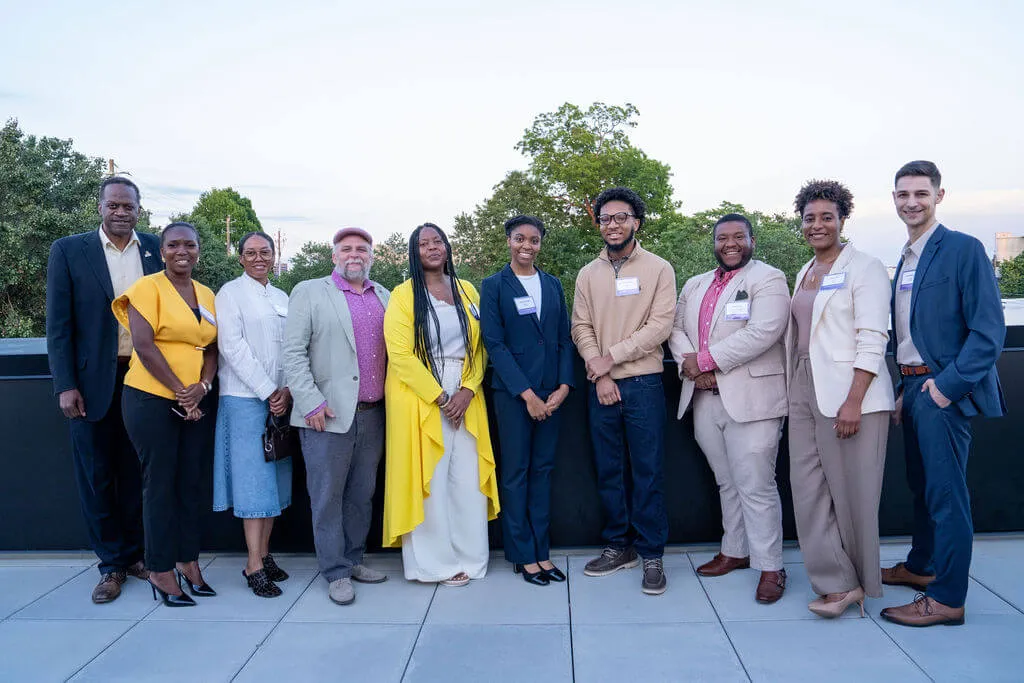
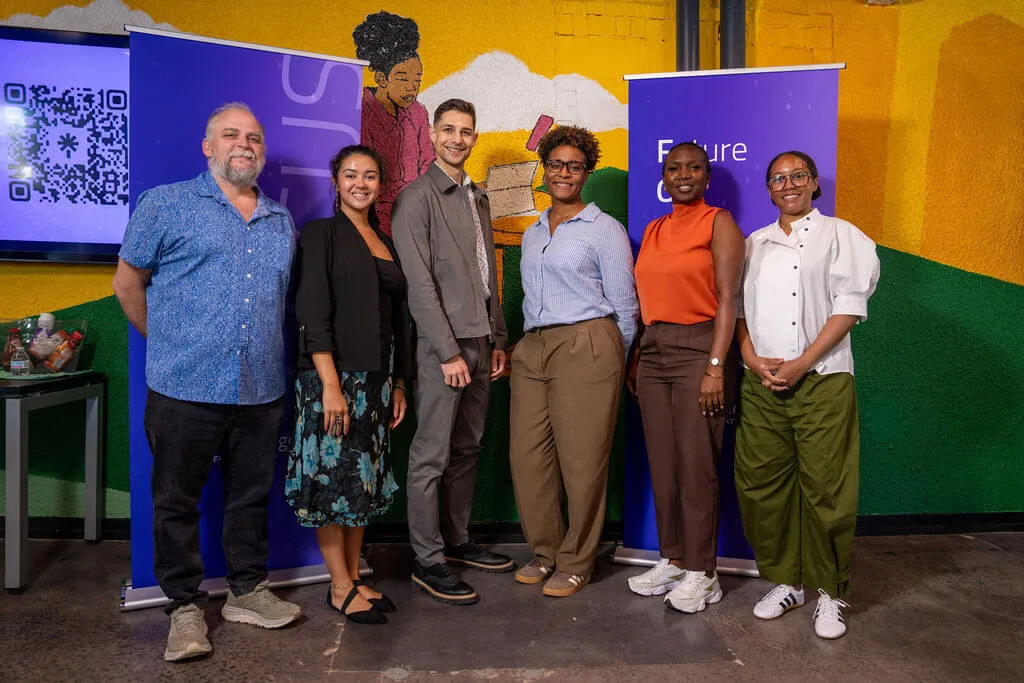
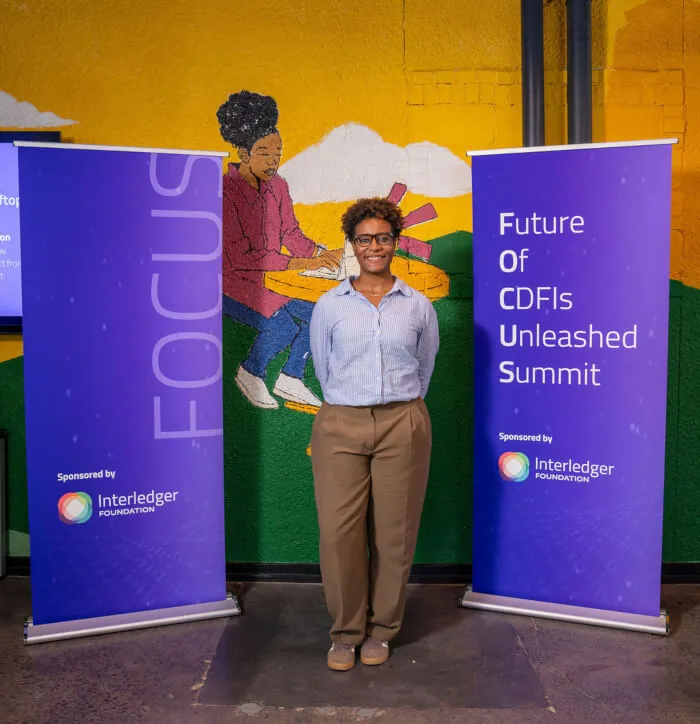
Thank you to the participating organizations:
AltCap is a Community Development Financial Institution (CDFI) committed to increasing access to capital for small businesses and entrepreneurs in underserved communities.
Kiva is a global nonprofit expanding financial access to help underserved communities thrive. Through its innovative lending platform, Kiva enables individuals and small businesses to access capital through community-powered, crowdfunded loans.
The Washington Area Community Investment Fund (WACIF) is a CDFI dedicated to advancing equity and economic opportunity in the Washington, D.C. region.
Access to Capital for Entrepreneurs (ACE) is a CDFI that provides capital, coaching, and connections to help small businesses grow and succeed. Serving entrepreneurs across the Southeast.
Village Micro Fund is a nonprofit organization focused on expanding access to capital for underserved entrepreneurs through microloans and community-based financial support.
The Atlanta University Center Consortium Data Science Initiative (AUCC DSI) is advancing data science education and workforce development across Historically Black Colleges and Universities.

Chiara Ostrin is a dedicated member of the marketing and communications team at Interledger Foundation. With a bachelor’s degree in Industrial-Organizational Psychology and a strong background in project management and marketing, Chiara combines her passion for storytelling and social impact to raise awareness about global digital financial inclusion and the transformative potential of the Interledger Protocol.