The Power of Belief in Each Other
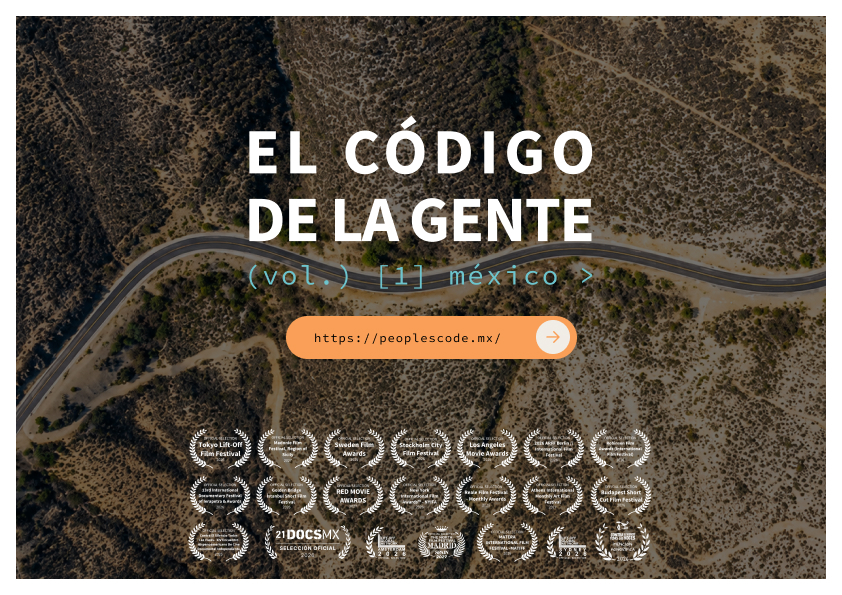
Last year in Mexico, I was part of the team that filmed a documentary called The People’s Code. Directed by Coizta Grecko B, it follows Isabel Cruz, a Mixtec activist, and Stefan Thomas, co-creator of the Interledger Protocol, as they work with rural communities to build open-source financial tools for people the banking system has left out. At its heart, it’s a film about community, culture and access to financial services.
It began over coffee in Mexico with Roberto Valdovinos of Cámara de la Gente (the People’s Clearinghouse). As he explained what they were building, why it mattered and what stood in the way, We kept coming back to the same thought: this is a film, a story that needs to be told.
The People’s Clearinghouse was born as a project that responds to a series of needs. In the social sector, there are microbanks, savings cooperatives, all small institutions that don’t have their own ways of making transfers, connecting to the national financial system, nor especially receiving remittances. And on the other hand, there’s the Interledger Foundation, which has sought, since its creation, to promote financial inclusion through technological innovation.
– Roberto Valdovinos, Cámara de la Gente
I had never made a documentary and had no idea where to start. I shared the idea with producers, still doubting it would happen, but the idea felt bigger than the odds. Then I met Vanessa from Gantha, who took that seed of belief and said: we can do this. She and Ana Paula, as executive producers, made the impossible feel possible.
When other people believe in an idea, belief grows. It builds its own momentum and clears a path for others to follow.
Briana Marbury, CEO of the Interledger Foundation, said “yes” without hesitating. Chris Lawrence, Chief Program Officer, and Alex Lakatos, Chief Technical Officer at the time, said they could get the teams to Oaxaca, Mexico, for filming. Stefan Thomas, co-creator of the Interledger Protocol said, “I can be there.” Isabel Cruz, CEO of the Mexican Association of Social Sector Credit Unions, Andrez Aruz CEO of Peoples Clearinghouse and their whole team said yes. Any one of them could have been the reason the project stalled. Instead, everyone said yes without knowing what would come next.
That is how change starts: people bound by a shared belief, willing to act before the outcome is certain. Together, they create something no one person could.
Why make a film about money? Because financial agency shapes almost everything else in our lives: how much control we have over our lives, the choices available to us, and whether the systems around us support us, or hold us back.
Many of these systems are not just unfair; they are unjust. There’s a difference between not being included and being actively excluded. People are shut out not because of their capabilities, their contributions or their culture, but because they are judged ‘unprofitable’.
If you have wealth, you earn interest, borrow at lower rates, and have a say in how your money is managed. If you don’t, you pay higher fees, credit is scarce or extortionate, and you have little or no say at all.
Money, it has good and bad sides, right? Because there are always demons where there is money. But building a community bank where the savings of the people who live in that community are, and for them to receive loans is not easy, but it has a qualitative leap in the economy and also has a qualitative leap in terms of the power of the communities.
– Isabel Cruz
History tells us that people acting together can change systems. But we rarely see the start of that story, or capture it as it happens: the first footprints on the path.
That’s what this documentary does. It tells the story of Cámara de la Gente, and of rural Mexico in all its beauty. Artisans, families, and communities shut out of the financial system are coming together through a network of community banks to take control of their financial lives. With the support of the Interledger Foundation, they are working towards a future where money sent home from the United States reaches families directly, without costly intermediaries.
Vanessa conducted the interviews. She held space and drew out the story behind the words: not just what people said, but why they said it and where it came from. It wasn’t just about money. It was about beliefs and building futures.
My viewpoint of money is that it’s an expression of what you’ve done for others. When money is disconnected from its purpose, it turns into something that can ruin your life.
– Stefan Thomas
Documentaries capture moments that won’t come again. People change and move on; we live in transience. But everyone who said yes, and everyone in front of the camera, left a footprint.
When people watch this story, I hope they are inspired and understand systems are constructs, and they can be changed. Accumulated wealth is not the same as value. Community matters; we are interdependent. Sometimes the change isn’t for our own lives but for the next generation, and it’s still worth doing.
Just because ‘it’s the way things are’ doesn’t mean ‘it’s the way things need to be’. And that belief reveals a deeper truth: we are part of each other’s stories in ways we don’t, and may never, know.
The People’s Code is now on the international festival circuit, with selections including DocsMX, ARFF Berlin and Tokyo Lift-Off. Follow the journey at peoplescode.mx (opens in a new tab)