Digital Financial Services

Supporting financial service providers to build and participate in open, interoperable payment networks.

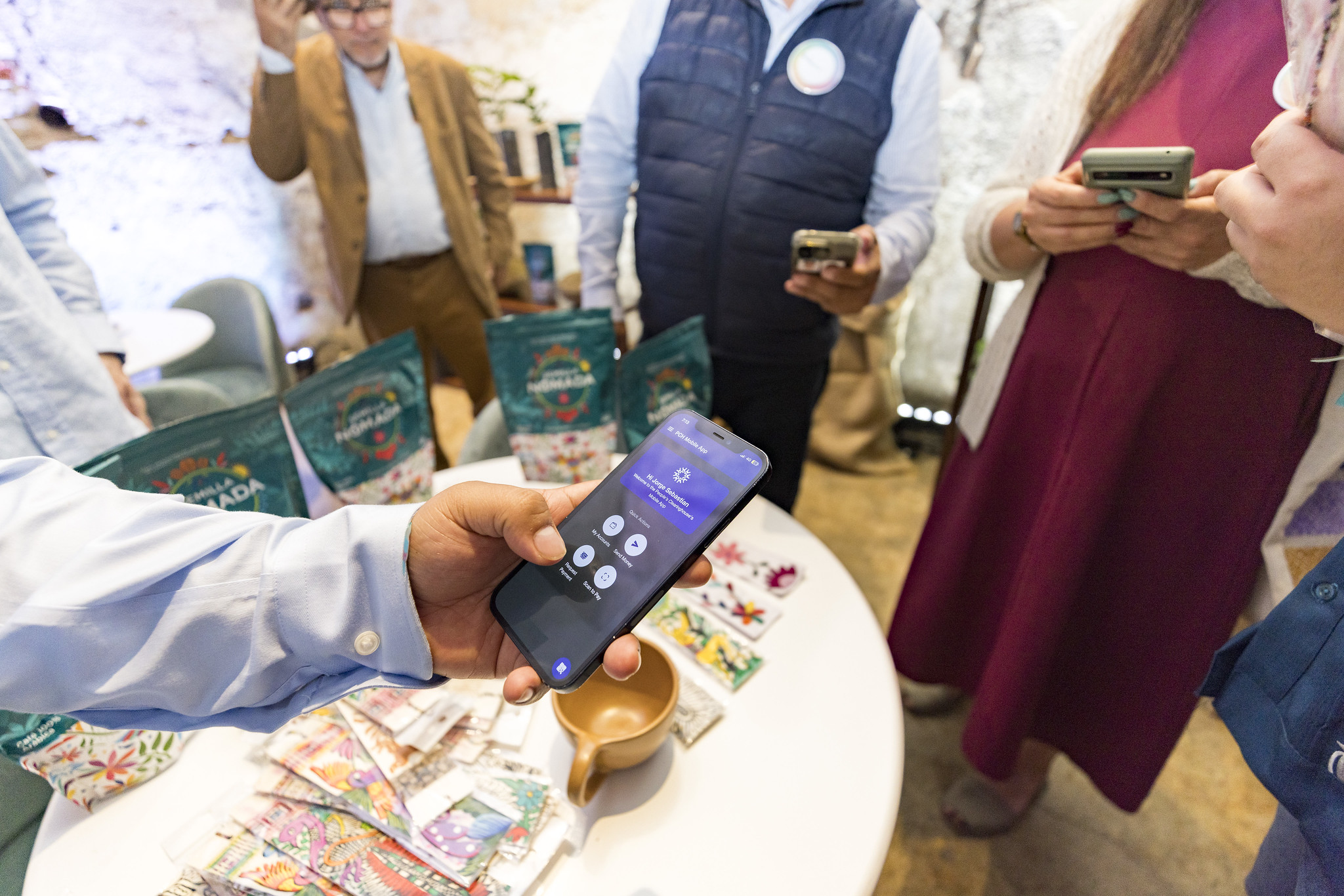
A person holds a phone using the People's Clearinghouse application, making a payment.

The Digital Financial Services Grant supports financial service providers that are ready to implement interoperable payment infrastructure using Rhyza and Interledger technologies.

Across markets, digital payments often operate within disconnected systems, creating friction for financial institutions and limiting how easily consumers and businesses can transact across providers, networks and borders.

Through this grant, the Interledger Foundation will support organizations to implement and pilot open payment infrastructure. Each funded institution can connect with others, and every connection helps build a more open, interoperable financial system. 

Selected institutions may receive grants of up to USD $350,000 to implement and complete projects within 18 months.

At a Glance

Who it is for

The grant is designed for regulated financial service providers, or organizations with a credible pathway toward the regulatory authorization required for their proposed services.

Eligible organizations may include:

  • Credit unions and savings cooperatives
  • Remittance providers
  • Community-based financial institutions
  • Digital-wallet providers
  • Other regulated/regulation-ready financial service providers
What it supports

  • Integration of Rhyza, the open source software that connects your existing infrastructure to Interledger and Open Payments. 
  • Technical development, infrastructure and testing for cross-border interoperable payments
  • Regulatory and compliance readiness
  • Pilot deployment with customers or partners
  • Transaction and settlement testing

How it works

  • Implementation period: 18 months
  • Grant funding: Up to $ 350,000 
  • Number of awards: Up to three grants will be awarded. We will prioritize proposals with a focus on projects in Colombia and the broader Americas, although global applications are welcome.
  • Application process: Two stages
  • Phase 1 Application deadline: Friday, December 11, 2026 at 11:59 pm ET 2026 @ 11:59 pm ET.
  • Phase 2 is anticipated to run from February 1 to 26, 2027, and will be open to selected applications from Phase 1.

What We Are Looking to Build

We want to support institutions that can demonstrate how our open, interoperable payment infrastructure can work in practice: connecting systems, establishing network relationships, testing transactions, serving customers, and generating lessons that can support future implementations. By bringing more financial service providers into interoperable networks, the projects we fund can help advance the Interledger Foundation’s mission to foster an inclusive global financial system.

Our interoperable payments infrastructure includes Rhyza - a free, open source software that connects a financial service provider’s existing infrastructure to Interledger, so it can make payments across systems and currencies and offer Open Payments-enabled accounts and services. Open Payments is an API standard that enables secure, consent-based payment initiation and management. Together, these technologies support accessible, interoperable payment services. 

How to Apply

Applications for Phase 1 are open until Friday, December 11, 2026 at 11:59 pm ET.

For Phase 1, we ask all interested organizations to submit a short application form (opens in a new tab), providing key details about your proposal.  Applicants with a strong Phase 1 submission will be invited to Phase 2, where a more detailed proposal shall be requested. Phase 2 is anticipated to run from February 1 to 26, 2027. 

Please review the 2027 Digital Financial Services Grant, EOI Resource Kit  (opens in a new tab)and our full FAQ for program guidance and resources to help you develop your proposals for Phase 1.

Impact Stories

People’s Clearinghouse

People’s Clearinghouse (PCH) is a digital payments platform that seeks to connect Mexico’s community banks and savings cooperatives with the national financial system and international remittance networks. Led by AMUCSS and built on open-source Interledger technology, the project is working to route remittances straight into community bank accounts instead of cash, so money stays local as savings and credit.

With support from the Interledger Foundation, PCH has grown into a production-ready platform, demonstrated live at the 2025 Interledger Summit in Mexico City. It expects Central Bank authorization and launch by the end of 2026, reaching several hundred thousand people across its partner network, many gaining access to digital payments for the first time.

Watch our mini-documentary about PCH and their work.

Video

Our Grantees

To learn more about the work and projects of past recipients of the Digital Financial Services Grant, check out our Grantee Directory.

Quick Reference Guide for Applicants

All you need to know about the Digital Financial Services grant.

This at-a-glance guide covers the essentials for the digital financial services grant: who can apply, what we fund, and how to apply. We recommend you also check our full FAQs and resource kit for the Digital Financial Services Grant.

Who Should Apply?

We are looking for financial services providers that are ready to move beyond exploration and into implementation when it comes to interoperability.

Strong applicants should be able to demonstrate:

  • Regulatory authorization or a credible pathway toward authorization;
  • Technical and operational readiness to undertake an integration;
  • Appropriate compliance, security, and operational capabilities;
  • An existing or prospective customer base;
  • A clear and sustainable business model; and
  • The ability to pilot services with customers, merchants, or strategic partners.

Applicants should have a clear use case for interoperability and a realistic pathway toward implementing and testing their proposed solution.

The Interledger Foundation is particularly interested in projects that strengthen participation in Colombia, the wider Americas, and across multiple markets or regions where integration can create broader interoperability and network value.

What Is the Application Process?
  • Phase 1: Initial Application – Eligible organizations submit a concise overview of their organization, proposed use case, how integrating Interledger technologies can address the identified problem and deliver value to their users, technical and regulatory readiness, network strategy, expected outcomes, implementation approach, and indicative budget. Applications should be submitted via Submittable (opens in a new tab). Phase 1 closes Friday, December 11, 2026 at 11:59pm ET.. 
  • Phase 2: Full Proposal – Shortlisted applicants provide a more detailed application outlining their proposed solution, technical architecture, and integration of Interledger technologies (including Rhyza), payment and settlement flows, regulatory and compliance readiness, implementation approach and milestones, staffing, detailed budget, risk assessment, expected outcomes, evaluation, and long-term sustainability. Phase 2 is anticipated to run from February 1 to 26, 2027.
What is the Funding Level and Grant Period?

Selected projects may receive $350,000 USD for an 18-month implementation period.

What Grantees Receive

Throughout the 18-month implementation period, grantees will not only have funding ($350,000 USD) but also support from the Interledger Foundation's program and technical teams, including regular implementation reviews focused on progress, technical integration, challenges, and next steps.

Grantees will benefit from:

  • Technical guidance and implementation support;
  • Regular engagement with Interledger program and technical leads;
  • Connection to the wider Interledger ecosystem;
  • Opportunities to share implementation learnings and project outcomes;
  • Access to relevant technical resources and documentation; and
  • Opportunities to contribute knowledge and practical insights to the development of open payment infrastructure.

The program is designed not only to support individual implementations, but also to generate practical knowledge about what is required to deploy interoperable payment infrastructure across different markets and operating environments.

What Does a Strong Applicant Look Like?

Strong applicants should demonstrate:

  • Regulatory readiness – Appropriate authorization, or a credible pathway to obtaining it.
  • Technical capacity – Infrastructure, technical expertise, or implementation partners capable of supporting a Rhyza integration.
  • Operational and compliance readiness – Strong governance, staffing, risk management, customer due diligence, security, and data protection processes.
  • Clear market need – A defined use case and an existing or prospective customer base.
  • Pilot readiness – Ability to move beyond a prototype and test with real users, customers, merchants, or partners.
  • Sustainability – A viable plan to maintain and grow the service beyond the grant period.
What Can Funding Support?

Grant funds may support activities across five key areas, including, but not limited to, the following:

  • Technical integration – RhyzaRafiki integration with Open Payments implementation, API development, infrastructure upgrades, security, and testing.
  • Compliance and regulatory readiness – Legal and regulatory assessments, licensing support, risk management, data protection, and compliance improvements.
  • Network participation – Peering arrangements, settlement and operational testing, transaction monitoring, and reporting.
  • Pilot deployment – Customer onboarding, partner or merchant engagement, pilot operations, real-world transaction testing, and evaluation.
  • Knowledge sharing – Technical documentation, open source contributions, implementation guides, peer learning, and case studies.

Our Approach to Grantmaking

Check out our Grantmaking FAQs to know our approach and expectations across all our grants. For additional clarifications, reach out to programteam@interledger.org.