Frontend Work Week: bonding and big decisions
Written by Anca MateiThe frontend team is young. Eight months ago, it wasn’t even a team, it was a single brave soul keeping all the Interledger Foundation websites alive. Since then, the foundation has been growing fast, and so has the team. Our newest member joined this January, just three weeks before the work week. Perfect timing!
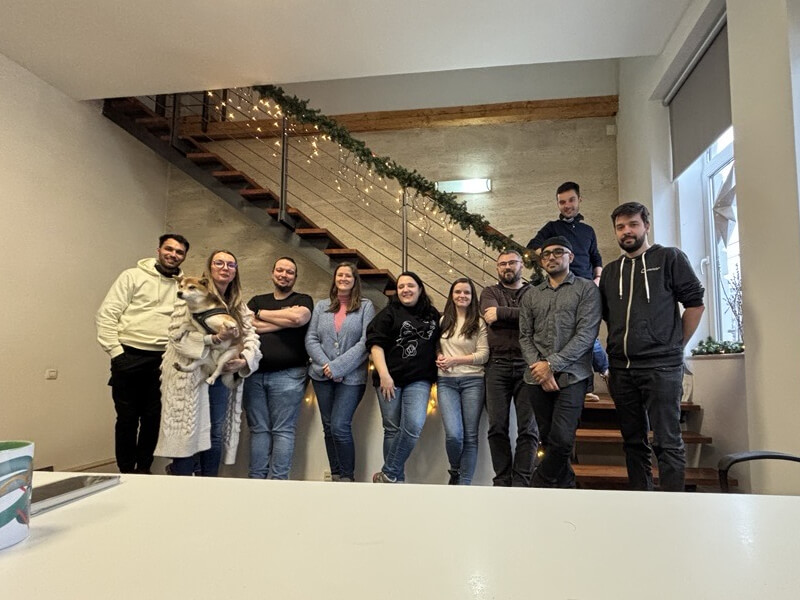
So yes, it made total sense to spend some time together: to get to know each other, align, and forge a real frontend team. Officially, the reason was the big revamp of the main Interledger website coming this year, and we wanted to make sure we start on the same page. Unofficially? Bonding is the juice. You might have this image of solitary developers spending their days in front of a screen – that’s not us! I mean…it is, but not by choice! We’re social people with simple needs: good coffee, good chats, and the occasional heated discussion about content management systems.
With that in mind, the very first frontend work week took place at the Breakpoint IT office in Cluj-Napoca, Romania, at the end of January, in sub-zero temperatures.
Day 1: Alignment (and ice breaking — literally)
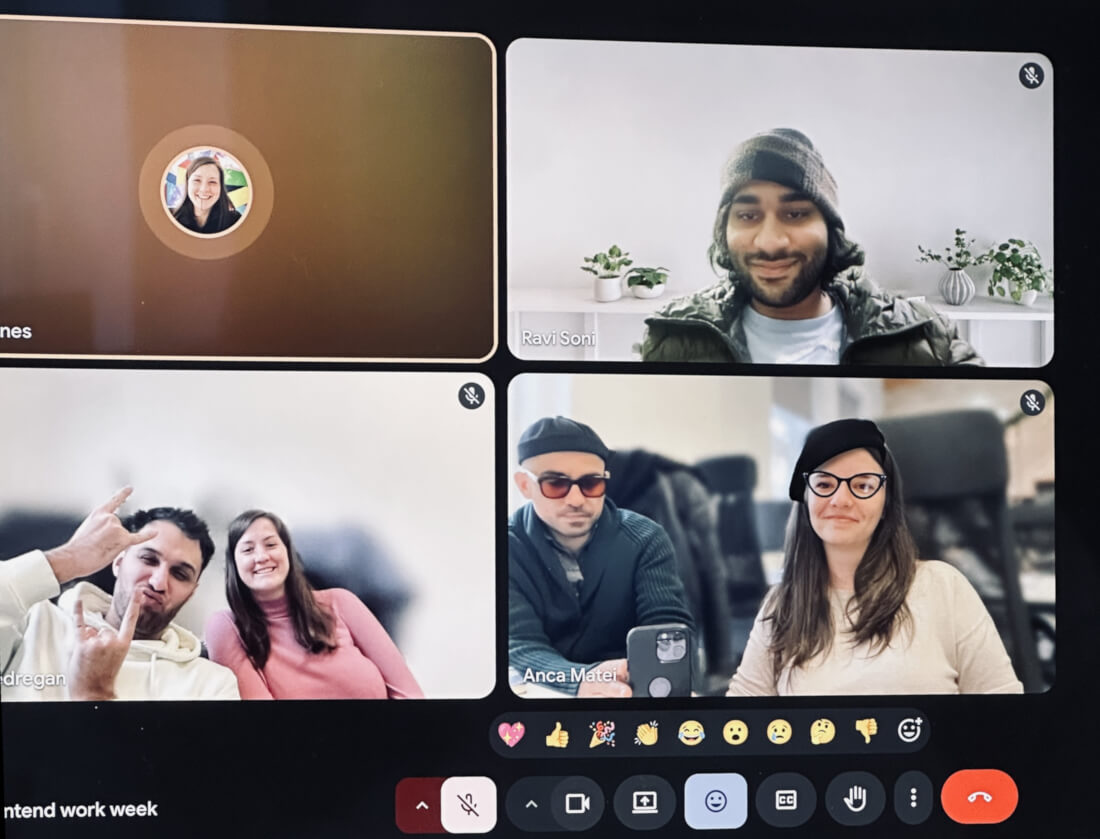
Day 1 was all about alignment. We kicked things off with an icebreaker (absolutely required, given the weather), and like the rest of the week, everything happened in a hybrid setup: some of us in the office, others joining online.
Once properly defrosted, we moved on to the real work: discussions around the website revamp. We talked through how work should flow between brand, communications, design, and frontend development, what a realistic timeline might look like, and how to juggle frontend work while branding happens in parallel.
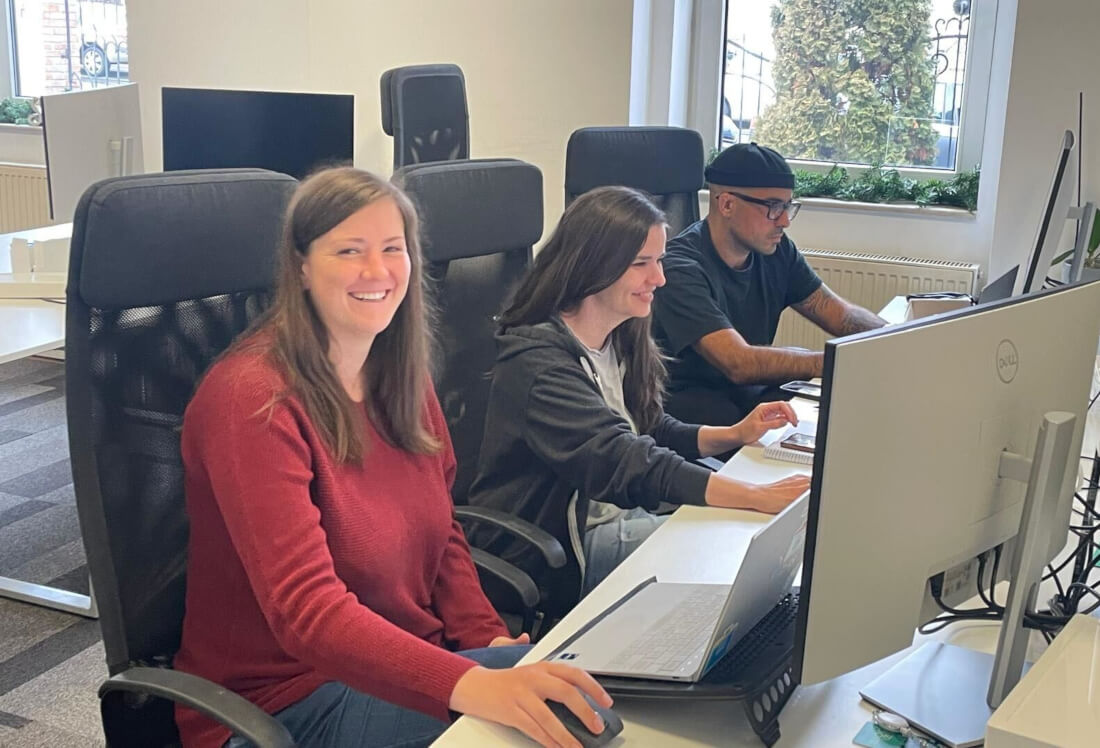
On the technical side, we aligned on the shared foundations for the redesign: the design system, Tailwind as our CSS framework, accessibility and performance tools we might use, testing strategy, and how to use staging environments without accidentally setting everything on fire.
By the end of the day, we hadn’t solved everything, but we left with fewer unknowns and a clearer plan.
Day 2: Deep focus and big questions
Day 2 was about focus work. While we had aligned on the big picture, everyone zoomed in on their own areas.
Our designer spent time documenting the new design direction informed by the feedback we received and performance-testing existing websites that exemplify this approach, while also kicking off a new design system for the foundation site. With input from marketing, communications, and brand, he gathered inspiration, patterns, and animation ideas to help shape where the design should go.
On the frontend side, we had a quest to win: getting the green light to migrate our Drupal-based website over to Astro. The battle plan had started before the work week, when we put together an Astro + Strapi proof of concept in just a week and a half - not only to show our excitement for this new tech stack, but also to prove it was possible and could solve many of our pain points. And because we play fair and like clean victories, we also set out to improve the editor experience for the current Drupal setup. So day 2 was largely about putting the finishing touches on that work so we could properly demo Drupal versus Strapi by the end of the week - and still show that Strapi and Astro could handle it better.
Each of us focused on specific parts of the editor experience, including:
- Clear revision history and auditing (who changed what, and when)
- Easier, more reliable translation workflows
- MDX linking - keeping MDX files in Astro as the source of truth, while connecting them to Strapi
- Image optimization
- Handling concurrent editing and merge conflicts
Day 2 also brought clarity around what “branding” actually means at Interledger and how the brand architecture works, thanks to a brand session led by marketing.
We wrapped up this productive day with a well-deserved team dinner, joined by the wider Interledger team in Cluj - good food, good laughs, and plenty of stories.
Day 3: The “why” behind the work
Day 3 took us up a level. Instead of focusing on how we redesign the website, we talked about why we’re doing it in the first place.
We discussed what’s motivating the redesign, what success would actually look like, and, importantly, how (or if) we can measure that success without fooling ourselves. Page views, fundraising, newsletter sign-ups, event participation, and getting more developers involved (through hackathons and open-source contributions) all came up.
Another major focus was building alignment across our global, remote teams. We explored how marketing, brand, design, and frontend can collaborate effectively, use a shared language and tools, and maintain a common vision.
We also got to know each other better through a “Manual to Self” exercise (inspired by a remote work workshop), which, as the name suggests, is a “manual” for each team member describing their working styles, communication preferences, blind spots, and quirks.
This confirmed what we already knew - that we have different approaches, with some of us prioritizing speed and others focusing on detail-oriented work - but it also gave us the chance to verbalize these differences and better understand each person’s full working context, rather than just pieces of it. Something everyone on the team seemed to agree on is that there may be no such thing as too much feedback (especially positive feedback), and that well-defined tasks are highly valued and relied upon by the team.
Day 4: Coffee, conclusions, and celebrations
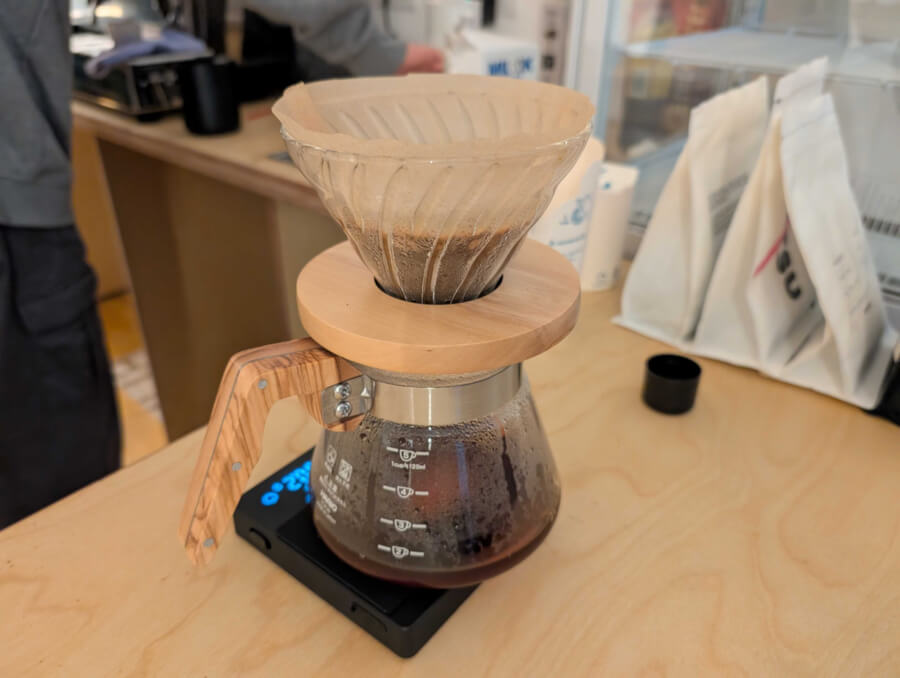
Day 4 started at Alex’s (Interledger’s CTO’s) coffee shop Brewkai, where we enjoyed brewed coffee with a side of barista insights. The shop isn’t officially open yet - furniture still waiting to be put in place, the bonsai still missing from the windowsill - so it felt like a real privilege to be among the very first customers. There’s something special about being present at the birth of a place.
After caffeinating ourselves (possibly a bit too much), we headed back to the office for the Drupal vs Strapi presentation. Whether it was the coffee or the hard work we put into it, the presentation was a success. We confirmed Astro as the future framework for the website, alongside Strapi for content management, enabling a cleaner editor experience, faster design iteration, and more seamless translations.
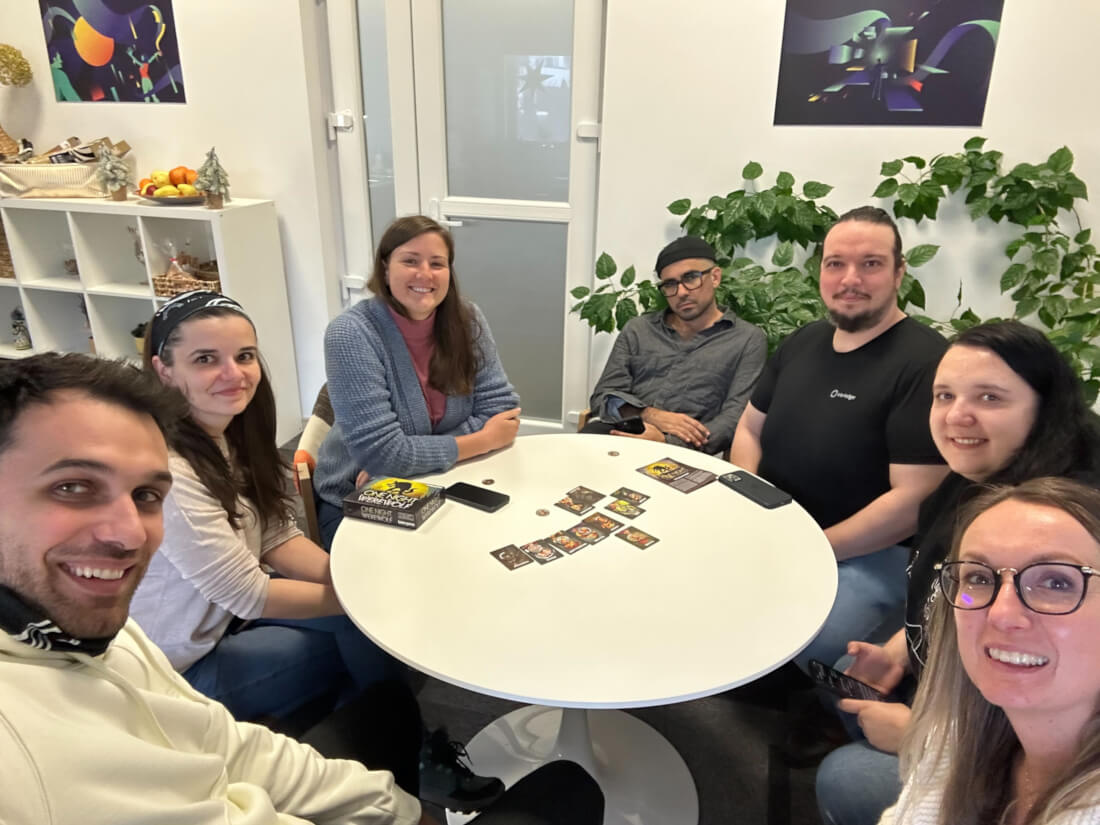
As the last official work day, we kept the ending light: board games, song and movie trivia, and then an office get-together that brought together the frontend team and the wider Breakpoint IT staff working across the Interledger ecosystem.
Reflections
The week proved productive in many ways. More than anything, though, the week truly bonded us as a team.
Now it’s time to roll up our sleeves. We have a website to move over to Astro, with content managed through Strapi. We need to ensure a smooth, friendly editor experience for a growing group of content editors; and then give the Interledger Foundation website a brand-new face.
Plenty of work ahead. But after this week, we’re more than ready.
As we are open source, you can easily check our work on GitHub. If the work mentioned here inspired you, we welcome your contributions. You can join our community Slack or participate in the next community call, which takes place each second Wednesday of the month.
If you want to stay updated with all open opportunities and news from the Interledger Foundation, you can subscribe to our newsletter.